• Archives
  • Products
  • Operative Dentistry
  • Dental Team Communication
  • Practice Management
  • News
  • Research
  • Dental Debates

DentalBuzz: a jolt of current

trends, innovations, and quirks of dentistry

  • Home – Latest Buzz
  • Bloglist
  • Indie Dental Showcase
  • Free Dental Timer
  • Practice printables
  • Podcasts

Battlebots: American Eagle vs Hu-Friedy

July 16, 2015 By Trish Walraven 9 Comments

Do you want to see a secret video of one dental hygiene instrument killing another? Sure you do.

But first, a confession: It’s not really secret. This video has been on YouTube since May of 2013 but as of the time I’m writing this it’s had less than a thousand views. I find it to be pretty scathing.

How can a video about dental curettes be scathing?

Because it challenged my opinion about my beloved Hu-Friedy instruments, that’s how.

As hygienists, we’ve been taught to “click” calculus deposits off of teeth. If you have a traditional stainless steel instrument, it needs to be sharp so that it can dig into the deposit, right? Right.

There’s sharp, and there’s hard. Sharpness is what gets you “clicking” the calculus off.  Hardness is… well, it can shift your whole method of OMG YOU WANT ME TO SHAVE WHAT? instrumentation.

We’ll get back to shaving and being hard in a little bit. (!) What I want you to do now though is to watch the video below so that you can understand the rest of this post (just please ignore the first 40 seconds of suck):

What just happened there? Pretty simply, there’s this thing called the Rockwell C hardness scale that measures the hardness of metal, it’s on a scale of 1-100, and when cryogenically-processed steel with a hardness of 60 meets plasma spray-coated steel with a hardness of 89, the softer metal is going to get damaged. That TOOL done got OWNED.

And why does this matter now? These two curettes, one made by American Eagle Instruments and the other by Hu-Friedy, are apparently in direct competition with one another, and Hu-Friedy is making a big stink about the claim that American Eagle’s instruments are sharper.

“Mine are sharper!”

“No, Mine are!”

It’s like that. You can pretty much ignore both sides, and take the marketing for what it is. LOOK AT MY SHINY NEW STUFF IT’S THE BEST (i love youuuuu).

Whatever. Especially the I Love You part. So, you remember Nevi 4, right? – the Traveling Plushie Scaler?
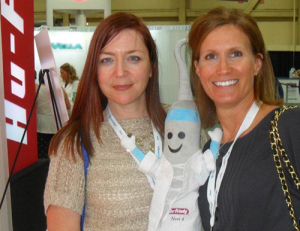
nevi4trishmolly

here I am hanging with Nevi and my co-hygienist at the ADA meeting in Vegas.

My mini-Nevi watching TV with his buds like he does sometimes.

No, I will NOT be posting the photos from that crazy after-party thing that happened with all Nevi’s friends – you know, the Travelocity roaming gnome, Chester Cheetah, the Noid, Stefon from SNL, yeah, that crowd – because I’m not going to give you blackmail material on me like that. But I did just make you look at a picture of my cutsie wootsie doggies, aren’t they just the most adorable schnauzers ever?

Anyways….

So yes, I understand the loyalty thing we’re supposed to have with a company like Hu-Friedy that respects hygienists and is nice to us and is the market leader and the oldest in the business. But sometimes, a product comes along that is actually different enough to give it a chance.

I’m going to say it. I think harder is better.  (shut up, the person who just muttered “you would.”)

Step to the left, Nevi plushie. You have your soft place in the world, and American Eagle XP has its place as well.

What I’ve noticed with using the XP instruments and their hard coating is that the texture of calculus feels really different. Like, it’s softer. Like, I don’t click it off. I shave it off.

SHAVE.

Shaving teeth instead of scaling? It’s really, really weird, but I like it. Who ever thought that you could slice through calculus like you’re carving a turkey? But it feels like that. Instead of biting off the whole chunk of tartar at once, the XP technology lets you lighten up your touch in an entirely different way than you do with even the sharpest stainless steel instrument.

Now, there is a down side to owning American Eagle XP instruments over traditional stainless steel ones – you have to baby them a little more because they can bang up against each other and shorten their lives. That part irks me, of course, because not only do I not want to have to put my instruments in cassettes, I don’t want to ever have to sharpen them either like you do with the Hu-Friedy EverEdge. I’m stuck somewhere in the middle.

And yeah, there’s that “sharp” thing again.

According to the study that was released yesterday by Hu-Friedy, compared to American Eagle XP instruments the Hu-Friedy EverEdge instruments will always be sharper. Also they launched the claim that XP instruments wear out faster because they aren’t able to be sharpened.

Does this mean Hu-Friedy is fighting back?

Well good then. That means they’re probably feeling threatened by a smaller, newer company, and competition is better for progress. It’s good for us because it means that we get to evaluate free instruments from both Hu-Friedy and American Eagle. And good for dental hygiene as a whole, too, because you’re not going to let a little emotion of loyalty get in the way of some good old-fashioned brawling to win your business. You’re free to explore all your options.

Let the metal shavings fly, and you know what they say about having competition, right? Steel sharpens steel. Iron sharpens iron.

And may we all have better instruments for it.


A blogger since 1997, Trish Walraven, RDH, BSDH is a practicing dental hygienist in the suburbs of Dallas, Texas and marketing manager for BlueNote Communicator, software that keeps dentists running on time for their hygiene checks. She’s having to take back the “harder is better” comment now with her new mattress. Oops.


References:

Hu-Friedy Commissions Independent Study to Evaluate Scaler Sharpness:
http://www.enhancedonlinenews.com/news/eon/20150715006545/en/sharp/scaler/dental 

RDH Magazine: No More Dull Instruments!
http://www.rdhmag.com/articles/print/volume-32/issue-5/features/no-more-dull-instruments.html

The Uncoated Truth:
https://www.hu-friedy.com/TheUncoatedTruth

RDH Magazine: How instruments increase productivity
http://www.rdhmag.com/articles/print/volume-33/issue-4/features/how-instruments-increase-productivity.html

That was cool, right? The shaving thing? Be sure to share this video with everyone that didn’t realize that SHAVING is what XP is all about.
Filed Under: Dental Debates, Featured, Instruments

Is Arestin® a red flag?

September 5, 2014 By Trish Walraven 70 Comments

placementflags
Not long ago, all dental practices were owned by the dentist who took care of you. Sure, they might not have given you any anesthetic before they smashed silver crunchy metal into your cavities, and they may have slapped you around and given you Post Traumatic Stress Disorder any time you thought about opening your mouth wide for anyone, but at least you knew that the dentist shoving their knuckles into your nostrils was the one dictating how things were done around there.

Since then, dentistry has gone all Wal-Mart on the public. There are thousands of dental offices that are part of large chains, where the dentists who take care of you are merely employees, where the quality of dental care provided to patients is secondary and instead the amount of profit generated by each provider becomes the indication of that person’s worth within the company. Can you imagine a leaderboard, like in a sales department, where all the dentists’ production numbers are on display for the entire office, so it’s a race to see who can make the most money?

LeaderboardDental

As a patient, don’t you get giddy at the thought of being ridden like a thoroughbred horse? Me neither. My health is not a commodity.

Dentistry is a little different creature than regular medicine in the sense that TEETH ARE OPTIONAL. You can be a very healthy individual, only with no teeth. It’s kind of like having a hand amputated – your quality of life may be affected, but a hopelessly infected hand should be removed and replaced with a prosthetic. If your body is rejecting your teeth for whatever reason, that’s when there are health concerns as well. Dental professionals make it their life’s work to help you keep your teeth in as close to original condition as possible.

The problem is that when money is involved, you can bet that there are those who will abuse this relationship. There’s scare tactics, there’s bait-and-switch, there’s all the usual sleazy sales pressure used to extract as much income from each patient as possible. New patients often bring us treatment plans that they are unsure of, looking for second opinions, trying to figure out why they don’t trust the previous dental offices’ diagnoses. I just want to say it straight, “They’re taking you for a ride, dear.”

Whip. Whip.

Well crud, I never wanted this article to be an analogy of horse racing with the big hats and Bourbon and milk-drinking and jockeys. So, let’s start over and begin talking instead about Red Flags and Grey Areas.

redflag

Red flags, of course, are the signals you get when you realize something that seems good, isn’t so good. Red flags are big fat warning signs.


Greyarea
 

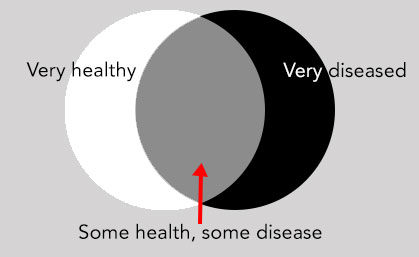
Grey areas, are, well, not really black and not really white.  Grey areas are where black and white kind of blur into each other, and sometimes they end up looking a little suggestive (!) like the image above. Yeah, sorry about how weird that looks when I take it out of context.

When it comes to the health of your mouth we usually look at two things: your teeth, and the stuff that holds your teeth in your mouth. That’s what we’re going to talk about in this discussion, what you think of as your gums. Dental professionals call this part of you your periodontium. If your gums are in excellent condition, you have what is called periodontal health. On the other hand, if your gums are seriously letting go of your teeth you have periodontal disease.


As you can see, the biggest part of this diagram is the Grey Area. This is where most people land, especially if they haven’t been to the dentist in a while. Even if your front teeth are mostly healthy often you’re automatically categorized into the Very Diseased category because you have too many spots in your mouth that are infected with bacteria to treat you as a Very Healthy person. That’s when you’ll get a treatment plan designed to minimize the effects of your disease.

When your mouth is in the Grey Area, this is where treatment recommendations can vary the most from office to office and even from person to person. Almost every dentist will prescribe the same treatment course if your case is black and white (very diseased or very healthy). If you’re in the Grey Area though, this is when Red Flags will start to stick out.

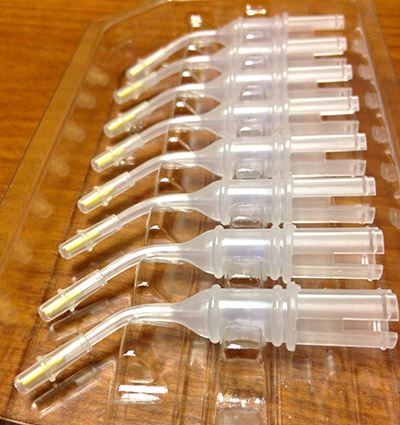
There’s one Red Flag in particular that keeps showing up. Arestin® is a yellow powder containing minocycline microspheres – an antibiotic designed to help diseased gums heal faster. The powder is puffed deep into an infected spot under the gumline where it hardens upon contact with moisture and time-releases the antibiotic for about three weeks. Here’s what the package of cartridges looks like, with the yellow powder in the tip:

cartridges


Arestin is a great product! I’ve seen stubborn gum disease completely disappear when we’ve used it very selectively in our practice. So the Arestin itself isn’t a problem. The problem is how it’s being prescribed.

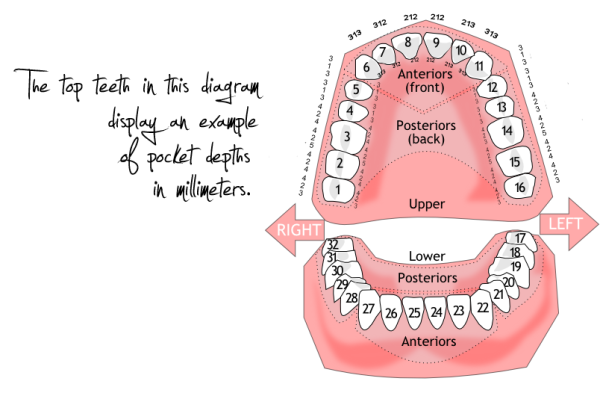
Say you had your gum disease treated with scaling and root planing (a “Deep Cleaning”), but a few spots are still unhealthy a month or two or three later. If your dentist or hygienist sees that you still have open sores that are higher than a certain parameter (over 4mm is considered the standard) this is when Arestin therapy provides the most benefit.probingexample

So when is Arestin a Red Flag? You’ve visited a new dental office, and not only are they recommending that you have treatment for your periodontal disease, they’re also saying you need a course of Arestin to be placed on the same day that you have your initial treatment. It’s even a bigger red flag if you floss regularly and never see your gums bleed.

The thing is, Arestin isn’t cheap. Just a single cartridge costs your dentist upwards of $15. Then there is the insertion fee; in other words, what the patient is billed for placement, and than can run as much as $60 per site.

Here’s where it gets crazy. An average mouth has 28 teeth. Each of your teeth has as many as six sites where Arestin can be placed. Let’s see, that’s $90 in material costs, $360 in placement costs. That’s potentially going to cost you $450 – per tooth.

You’re seeing the big picture now: treating gum disease can be quite profitable! This is why Arestin is such a big deal in the offices that are part of corporate dental chains designed for maximum shareholder profit. This antibiotic is marketed to dental professionals as a way to help us make money, all in the name of “helping our patients.”

So how do you end up getting prescribed Arestin therapy if your mouth is pretty healthy? If your hygienist or dentist was instructed to “force the probe” to create a deep measurement, that’s how. Stab ’em hard and voila! Fake gum disease! Here’s a story that exposes some of the bad things that have allegedly happened in corporate dentistry, including this example:

http://www.pbs.org/dentalworks-chain-misdiagnosed-for-money-dentists-say/

As you can see, lots of other stuff can be exaggerated as well to make sure that the dentistry performed on you is as profitable as possible. For now, though, we’ll stick to talking about the Red Flag, because this one cue may help you decide whether or not you’re being over treated.

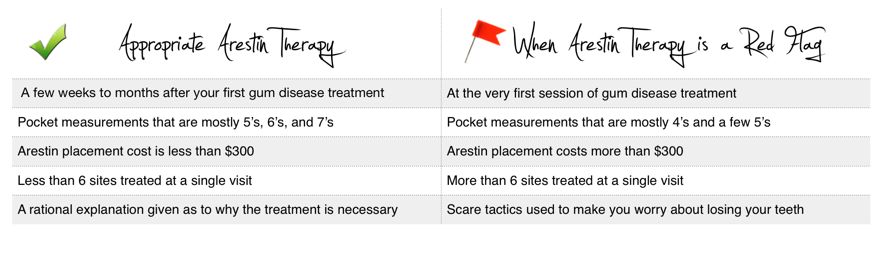
Here are the professionally accepted general guidelines about Arestin usage, then:

Appropriate therapy gridNow please don’t use this to go and bash your well-meaning dentist and hygienist, or the Arestin company, or worst of all, to justify the reasons you tell yourself why you don’t go to the dentist ’cause it’s all one big scam and you can’t trust anyone. Most of us really do want the best for you.

The point is simply this: if more people understand the difference between dental care that is patient-centered and dental care that is profit-centered, then greedy dental corporations are less likely to thrive.

If you think you have ever had this happen to you, I wrote this story for you. For you, so that you don’t feel so dumbfounded the next time you wonder whether or not a dental office is looking out for your health or only for their own. As a hygienist who knows fraud when I see it, I wanted to be sure that patients have a resource to help them defend themselves against predatory practices.

I’d like to end this with a small confession, then: I actually love placing Arestin, because when the dentist and I decide that it’s a good fit for a stubborn case of gum disease, it just feels so right.

So much for being objective.


References and resources:

Explanation of insurance coding of Arestin therapy after initial SRP: http://www.practicebooster.com

An example of Arestin-based fraud in a DHMO: http://caldentalplans.org/downloads/Henderson.pdf

Arestin drug label and study that shows slight improvement of using Arestin with SRP vs. SRP alone: http://dailymed.nlm.nih.gov/arestin

Criticism of Arestin studies and concerns about Arestin therapy : http://periodontist.org/is-arestin-a-therapeutic-treatment-for-reducing-gum-pockets/

A blogger since 1997, Trish Walraven, RDH, BSDH is a practicing dental hygienist and marketing manager for an indie dental software development company. Her mission with DentalBuzz is to offer a fresh podium of discourse for those involved in dentistry and to expose fun in our professional lives.

Filed Under: Anecdotes, Dental Debates, Featured, Money, Operative Dentistry Tagged With: antibiotic use in dentistry, Arestin, corporate dentistry, dental fraud, minocycline, periodontal disease

Crest toothpaste embeds plastic in our gums

March 4, 2014 By Trish Walraven 347 Comments

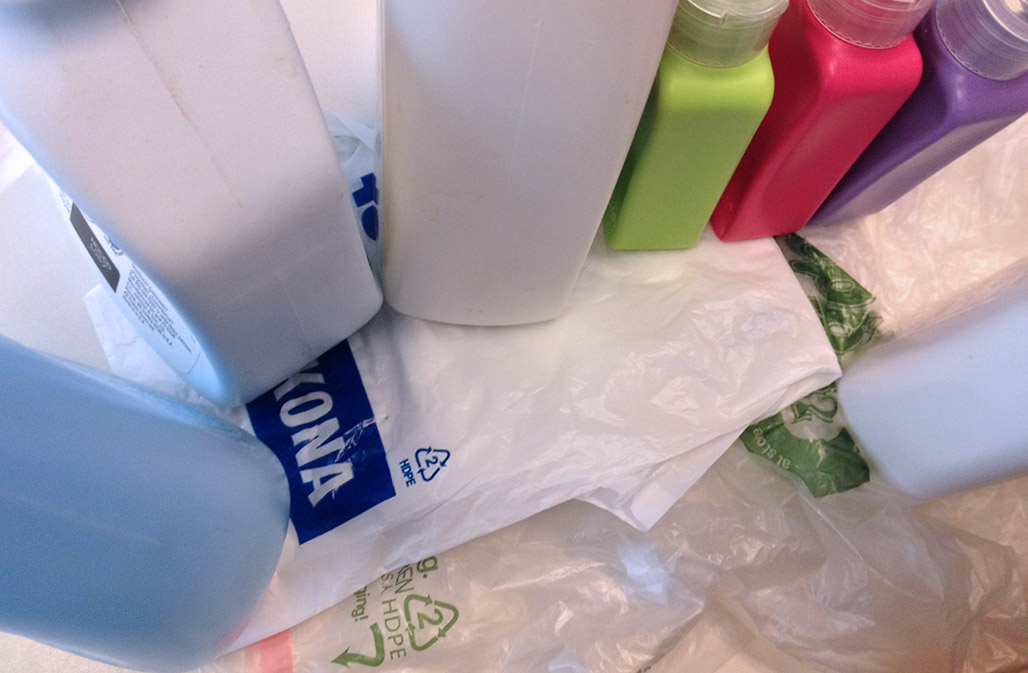
This is polyethylene:

bottlesandbags

Did you know that polyethylene is the most common plastic in the world? It is used primarily for containers and packaging, such as these bottles and plastic grocery bags, and has been a concern for the environment because polyethylene lasts practically forever and isn’t biodegradable. It only breaks down into smaller and smaller particles until you can’t see it anymore. That’s why a couple of states are trying to ban it in body scrubs and dental products.

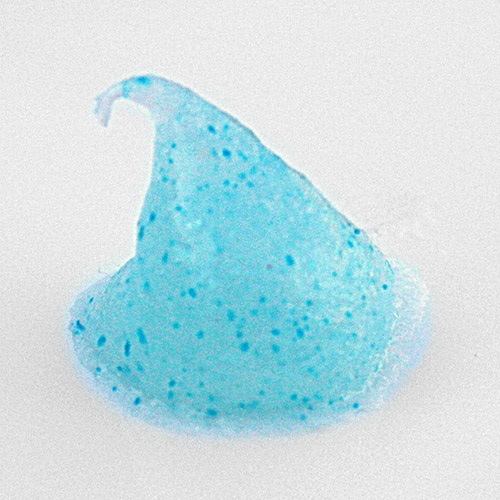
This is also polyethylene:
PeasizedTPaste

Well, not all of it. Most of it is toothpaste. But do you see those blue specks? That’s plastic. This is the suggested pea-sized amount that you should use when you brush your teeth. Yes, there is plastic in this toothpaste.

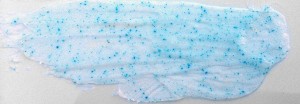
Want to see how many pieces of plastic are in this exact sample?

PasteSmear

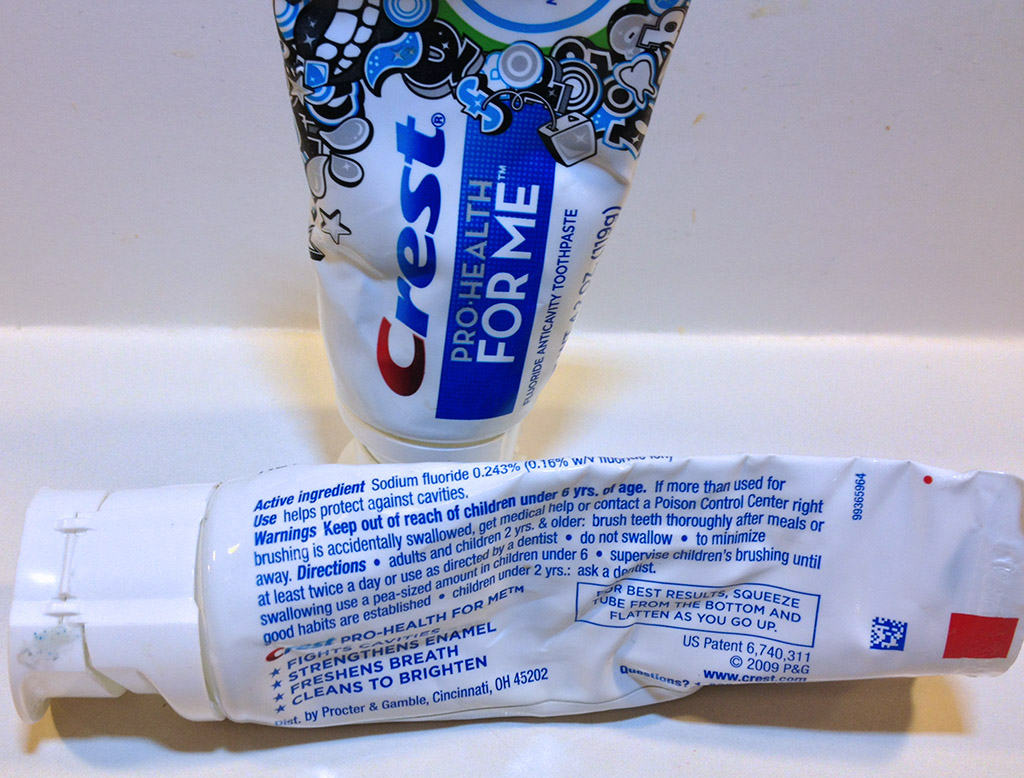
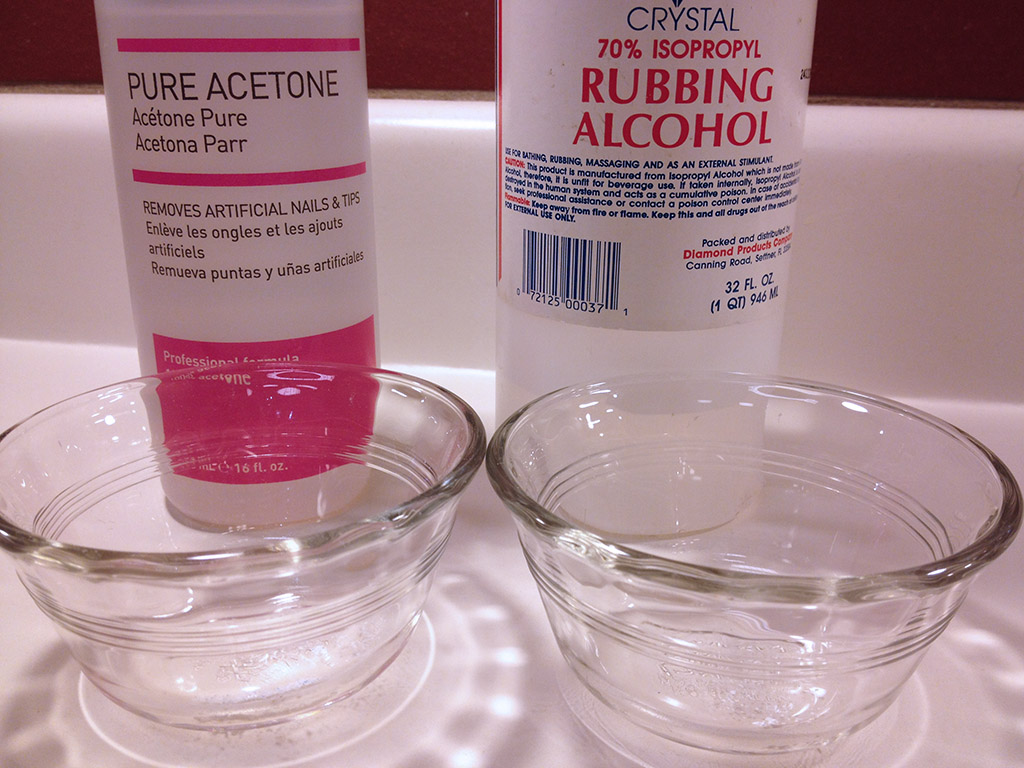
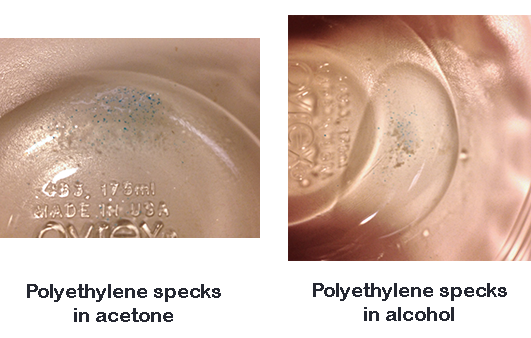
Not that I’m counting the bits but that seriously looks like A LOT of plastic… err…high density polyethylene. That’s what plastic trash cans are made from! If you throw away the box like most people do, the ingredients aren’t actually listed on the tube (sneaky, sneaky, Procter & Gamble!) However, I was able to track down the box here at this link. We’re not talking about polyethylene glycol, which is soluble in water. This stuff won’t dissolve in water, or even acetone or alcohol for that matter. How do I know it won’t dissolve? Because I put on my little scientist hat and tested it.

Like many of you, we often let our daughter pick out her own toothpaste at the store. She liked the tween vibe of this particular product so much that she chose it twice, but eventually the squeezed-out tubes ended up in the back of her toothpaste drawer.

Crestforme

When I first got wind that plastic was in some toothpastes, it was kind of exciting to realize that we had some on hand! And a bit concerning, because, after all, this is in my own home, used by my own child. Able to confirm that, sure enough, there was polyethylene in this toothpaste, I squirted out a pea-sized sample, mixed it up with some water, strained out the undissolved particles and let them dry on a paper towel. Oh, and I used a hair dryer to speed things up because I’m impatient. Then I shook approximately half of the sample into each of two pyrex bowls and added some household solvents:

acetonealcohol

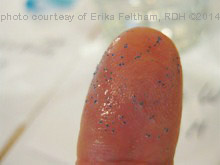
They didn’t dissolve in the acetone, (nail polish remover) or in the alcohol either. I even left the samples in the solutions overnight, then re-hydrated them. No change in the particles.

specks1polyethylenefinger

So it has been established here that polyethylene will not dissolve in the mouth, or even in household products. It is an inert substance, which means that it doesn’t change at all. You know, that’s pretty good in some ways, because at least it’s probably not morphing into big blobs of plastic evil cancer bait.

Here’s where the story gets scary, though.

You see, I’m not just a concerned mom. I’m also a dental hygienist. And I’m seeing these same bits of blue plastic stuck in my patients’ mouths almost every day.

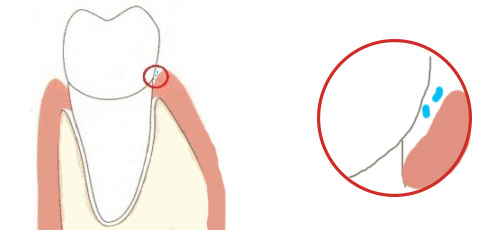
Around our teeth we have these little channels in our gums, sort of like the cuticles around our fingernails. The gum channel is called a sulcus, and it’s where diseases like gingivitis get their start. A healthy sulcus is no deeper than about 3 millimeters, so when you have hundreds of pieces of plastic being scrubbed into your gums each day that are even smaller than a millimeter, many of them are getting trapped:

plasticingums

The thing about a sulcus is that it’s vulnerable. Your dental hygienist spends most of their time cleaning every sulcus in your mouth, because if the band of tissue around your tooth isn’t healthy, then you’re not healthy. You can start to see why having bits of plastic in your sulcus may be a real problem, sort of like when popcorn hulls find their way into these same areas. Ouch, right?

Like I said, I’ve been seeing these blue particles flush out of patients’ gums for several months now. So has the co-hygienist in our office. So have many dental hygienists throughout the United States and Canada who have consulted with each other and realized that we have a major concern on our hands.

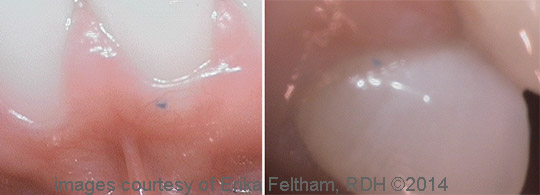
This is what an actual polyethylene speck looks like when it’s embedded within the sulcus, under the gumline:

gingival specks

I am not saying that polyethylene is causing gum problems. I’d be jumping too soon to that conclusion without scientific proof.  But what I am saying definitively is that plastic is in your toothpaste, and that some of it is left behind even after you’re finished brushing and rinsing with it.

Do you want plastic in your toothpaste? So far the only mention of polyethylene on the Official Crest website at this link is that it is added to your paste for color, not as an aid in helping to clean your teeth or to disperse important anti-plaque or anti-cavity ingredients. [Note: as of 9/3/14 Crest took down the link about polyethylene, but I saved a copy of it here in case this ever happened.]

In other words, according to Crest:

Polyethylene plastic is in your toothpaste for decorative purposes only.

This is unacceptable not only to me, but to many, many hygienists nationwide. We are informing our patients. We are doing research separately and comparing notes. And until Procter & Gamble gives us a better reason as to why there is plastic in your toothpaste, we would like you to consider discontinuing the use of these products.

Here are some of the brands (click each to see their ingredient list and labeling) that we currently are aware of which contain polyethylene:

• Crest 3D White Radiant Mint
• Crest Pro-Health For Me
• Crest 3D White Arctic Fresh
• Crest 3D White Enamel Renewal
• Crest 3D White Luxe Glamorous White
• Crest Sensitivity Treatment and Protection
• Crest Complete Multi-Benefit Whitening Plus Deep Clean
• Crest 3D White Luxe Lustrous Shine
• Crest Extra White Plus Scope Outlast
• Crest SensiRelief Maximum Strength Whitening Plus Scope
• Crest Pro-Health Sensitive + Enamel Shield
• Crest Pro-Health Clinical Gum Protection
• Crest Pro-Health For Life for ages 50+
• Crest Complete Multi-Benefit Extra White+ Crystal Clean Anti-Bac
• Crest Be Adventurous Mint Chocolate Trek
• Crest Be Dynamic Lime Spearmint Zest
• Crest Be Inspired Vanilla Mint Spark
• Crest Pro-Health Healthy Fresh
• Crest Pro-Health Smooth Mint

What you can do

At this point, it’s probably best if you leave your flaming torches back in the barn. We’re not going after witches or Frankenstein here; you’re using your power as a consumer to send a message that you do NOT want plastic in your toothpaste. Heck, you might even be worrying about what may happen if you or your children swallow some of it.

1. If you’ve already purchased one of these toothpastes you can take it back to the retailer where you bought it, make sure that the manufacturer knows why you’re returning it, and ask for a refund.

2. Lodge a Crest consumer complaint at (800) 959-6586 and report an adverse health effect, namely, that you’re concerned that plastic pieces may be getting trapped in your mouth.

3. Click here to send an email to Procter & Gamble, the makers of Crest.

4. Share this! Let your friends and family know that you are also concerned about the plastic in their toothpaste by clicking on your favorite social media link below and getting the word out.

Response to criticism

Procter & Gamble’s current party line? “We will discontinue our use of PE micro plastic beads in skin exfoliating personal care products and toothpastes as soon as alternatives are qualified.”

And your response then may be, “I will discontinue MY use of Crest toothpaste until there are no more decorative microplastics entering my mouth.”

Trish Walraven RDH, BS is a mom and practicing dental hygienist in the suburbs of Dallas, Texas. She is also the co-creator of BlueNote Communicator, the top selling intra-office computer messaging system for dental and medical offices.

References and acknowledgements

Plastic Trades Industry: http://www.plasticsindustry.org/AboutPlastics
US National Library of Medicine: http://dailymed.nlm.nih.gov/crest
HygieneTown: http://www.hygienetown.com/blue-dots-in-patients-mouths

And a HUGE thank you goes out to my friend and colleague Erika B. Feltham, RDH for bringing this problem to our attention and for her extensive research. Erika is dedicated to providing the best possible care for her patients. She has been active in the dental profession for over 30 years, is a recipient of the 2008 American Dental Hygiene Association/Johnson and Johnson Hygiene Hero Award, the 2010 RDH Sunstar Americas (GUM Dental)Award of Distinction, lectures extensively about the harmful effects of sour candies, energy and sports drinks, and along with her San Diego component, she is responsible for presenting the resolution on sour candy labeling at the 2009 CDHA House of Delegates.

Update on 9/10/14:

As requested, here’s a quick video I made today that demonstrates polyethylene microbeads becoming embedded after brushing. This is for real; I didn’t poke the plastic in my gums (although I may have brushed a little more rough than normal!).

Update on 9/20/14:

This story got picked up nationally over the past week, with these notable entries:

The American Dental Association issued this press release regarding the safety of plastic in toothpaste and whether or not to remove the ADA Seal of Approval on Crest products.

FDA says that plastic is not approved as a food additive: NBC National News – Today Show

Interview in Phoenix, AZ  mentioning the influence of DentalBuzz on Procter & Gamble:

Trish’s interview on Good Morning America:

http://abcnews.go.com/video/embed?id=25560562

Brian Williams on NBC:

http://player.theplatform.com/p/2E2eJC/nbcNewsOffsite?guid=nn_09_bwi_toothpaste_140917

A concise writeup at the Washington Post

And a final word on why we shouldn’t even be so preoccupied with toothpaste in the first place:

https://www.dentalbuzz.com/2014/12/30/toothpaste-can-do-more-harm-than-good/

Filed Under: Dental Debates, Featured, News, Products Tagged With: Crest polyethylene, Crest toothpastes that contain plastic, plastic in toothpaste, Polyethylene in toothpaste

Why your fingers shouldn’t be in the picture

March 15, 2013 By Trish Walraven 8 Comments

handinmouth

“Just this once; it’s okay.”

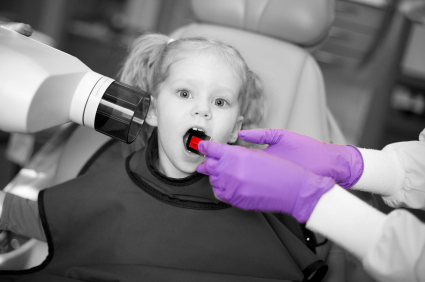
Does that sound like your practice? You know, you have a gaggy, bouncy kid who’s just about to tongue-thrust their way out of having those radiographs taken, but here comes Amazing Assistant to help you get a diagnostically acceptable image. SCORE!

The problem is that this never happens “just once.” I’ve seen the same person holding sensors in patients’ mouths dozens of times, and that’s when it becomes a problem. Yes, radiation is safer now that we’ve dialed it down and collimators make sure that there’s nothing scattering beyond the focused beam, but that doesn’t mean that we should be flippant about limiting exposure to our patients and most importantly, ourselves.

My best friend from high school could tell you not to hold those films in people’s mouths, too. She was a dental technician in the Navy and also worked for years in pediatric dental offices and orthodontics as an assistant, calming nervous children, helping them to have good dental experiences, and when she was exposing radiographs, sometimes she admits that she would make it easier on everyone if she would stay with the child while the x-rays were beaming through her hand.

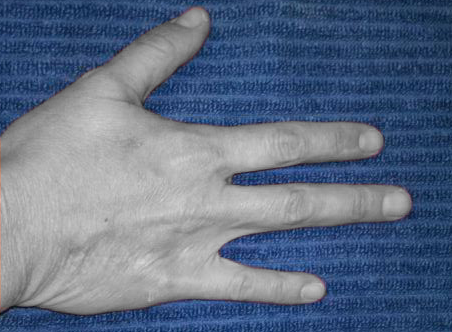
She doesn’t have to tell you not to hold the films, though. She can just show you why you shouldn’t:

KKBWhand2

This is her right hand. Several years ago when she was doing laundry her finger caught on the dryer and “snapped.” This is important, sort of like when your patient tells you exactly what they were eating when their tooth broke – don’t you pay that the most attention of all? Because it was the darn dryer that was the problem….(!) Let’s be serious, though. Like you, her doctor really didn’t care what broke her finger, he wanted to know why it broke.

Turns out that she had developed a giant cell tumor in the first (proximal) phalange of her ring finger that had eaten everything except a small sliver of bone and that was what had snapped. These are very, very rare in small bones like those found in our fingers; most osteoclastomas happen in the larger bones like femurs and such. Hmmm.

Even though the tumor was benign, because of the damage done, the possibility of regrowth and other factors, the decision was made for my friend to have her ring finger amputated. I would have had her flip you the bird for effect but she no longer has a middle finger either…! (think about it…!)

So she was fortunate enough to stay in dentistry as a patient care coordinator for a few more years as she recovered but is now working towards her master’s degree for speech pathology. While she doesn’t seem totally convinced that excessive radiation exposure caused her to lose her finger, she doesn’t count it out for even a second.

And neither do I.

Losing a finger may be anecdotal evidence about the dangers of radiation, but it’s enough for me to feel like enforcing what we already know to be true.
 
DBSmile1
 
 
Please share this story with those you care about, even if it makes you feel like the Radiation Nazi.

Filed Under: Dental Debates, Featured, Operative Dentistry, Research Tagged With: dental assisting, Dental radiation, finger amputation, pediatric dentistry

SOPA in your mouth

January 18, 2012 By Trish Walraven 3 Comments

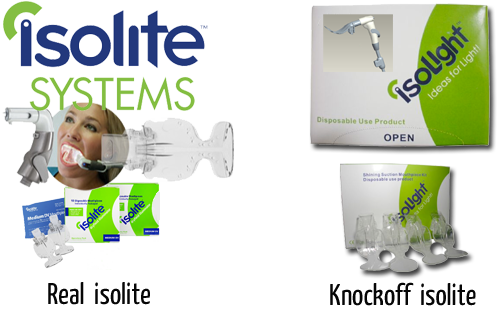
I have a soft spot in my heart for funny Engrish. Except when the person writing it has a blatant disrespect for patents, trademarks, and such. Isolite Systems has a slam-dunk product that has been previously featured here on DentalBuzz, and yes, we’ve even suggested that a clever hack was available which still gives the Isolite company a repeat source of income. There’s hacking, and then there’s design forgery.


This introductory email should sufficiently scare you away from even thinking about going to the dark side:

Dear Sir/Madam:

Good day! I am very pleasure to send you an E-mail to introduce our product– ISOlight Shining Suction! Pls check attachment. This product can bring a few of advantage for dentistry:

1. Work Faster, Brighter, Drier

ISOlight Shining Suction is with a continuous, powerful and shadowless illumination. Dentist can see it mach more clearly inside mouth, then they can work accurately and faster. The special design mouthpiece can supply a widely space for dentist. Operation become more convenience. This device can connect with high/low suction. then the water will go throuth mouthpiece and maintain mouth drier. The patient doesn’t need to get up the spit the water.

2. Shining Suction Stop Interruption and save more time, dentst can get more appointment

Base of the advantage, dentst can complete the operation faster and patient become more comfortable. EACH OPERATION WILL BE FAST 25%-30%. In the same working time, dentist can take more appointment and create more profit. In the same time, dentist and patient would not feel tried.

3.  Save Work

Shining Suction supply self-suction. Nurse doesn’t need to stay beside patient and hold high/low suction. She/he will be free to do the other assistance such as: mix the colophony and materail, clean the instrument, do autoclavable, pass and take the instrument etc. Then dentist can do operation more dedicated.

4. Safe

Special Mouthpiece will protect tongue and cheek. Patient will not be easy to get hurt.

5. Better Ergonomics

The ergonomic design of Shining Suction reduces fatigue and repetitive stress associated with retraction, suctioning, eyestrain, and motion spent adjusting headlights, overhead light or otherwise positioning the patient for better access or visibility.

6. Save Cost

The bright shining suction will supply the powerful light in mouth. Dentist doesn’t need to buy expensive fiber optic product, such as: Fiber optic handpice, fiber optic scaler, headlight, etc.

ISOlight Shining Suction is the new revolution dental product with many useful advantage. It will definitely help you increase your efficiency and profit. ISOlight will be your best assistant on your job.

If you have any question, pls feel free to contact me.

Do you still fight in the hard competition of old product? Do you still think about how to increase your business? Do you still warry about the profit reduce of old product? I think it is time to indraught ISOlight Shining Suction to help you.

For more detail and best distributor price, pls send E-mail to reference with your company detail.

Sincerely waitting for your reply. Have a nice day! Best regard

Kevin Guan, Export Manager, Codent Technology Co., Ltd

_________

If you ever see any other dental product knockoffs let us know here at DentalBuzz so we can “out” the dastardly company. SOPA and PIPA censoring isn’t the answer to problems like this on the internet. Awareness can only go so far, too. The real stand today has to be internal, so make sure that you continue to promote good enterprise instead of just free enterprise.

And it’s so hard for me to stand firm on my ethics because they make some REALLY CUTE HERMES BAG knockoffs out there! But I must stand up. For Isolite. And for every innovative company online that does its best to stay honest.

Filed Under: Dental Debates, Operative Dentistry, Products, Technology Tagged With: engrish, isolight, Isolite, isolite systems, PIPA, SOPA, trademark infringement

  • « Previous Page
  • 1
  • 2
  • 3
  • 4
  • 5
  • Next Page »

About

DentalBuzz explores rising trends in dentistry with its own slant. The speed at which new products and ideas enter the dental field can often outpace our ability to understand just exactly the direction in which we are heading. But somehow, by being a little less serious about dentistry and dental care, we might get closer to making sense of it all.

So yeah, a tongue-in-cheek pun would fit really nicely here, but that would be in bad taste. Never mind, it just happened anyways. Stop reading sidebars already and click on some content instead.

Recent Posts

  • Dry Humor, Wet Biofilm: A DentalBuzz Look at Periodontal Desiccation Therapy
  • Are affordable online nightguards any good?
  • CareCredit: The Easy Way Billionaire Banks Fill Cavities in Their Profits
  • Off-Label and Totally Legal: What the FDA Won’t Say About Fluoride Varnish & SDF
  • Dentists Rejoice over the Leica Camera Tariffs
  • It’s not OK for your dental practice to use free cloud-based communication
  • Patients ask, “Is it safe to go back to the dentist?”
  • Free “return to work guide” from the American Dental Association
  • Why COVID-19 increases your need for contactless payments
  • A virtual care package from worried dental hygienists
  • Lead Aprons feel so good! Here’s why.
  • What is this $&!% on my toothbrush?

Article Archives

Contact Us

Guest columnists are welcome to submit edgy stories that cover new ground (no regurgitations, please!) , or if there's a topic that you'd like to see explored please punch in your best stuff here and see if it ends up sticking to the website.

Follow DentalBuzz on Social Media

  • Facebook
  • Instagram

DentalBuzz Copyright ©2008-2026 • bluenotesoftware.com • All Rights Reserved