• Archives
  • Products
  • Operative Dentistry
  • Dental Team Communication
  • Practice Management
  • News
  • Research
  • Dental Debates

DentalBuzz: a jolt of current

trends, innovations, and quirks of dentistry

  • Home – Latest Buzz
  • Bloglist
  • Indie Dental Showcase
  • Free Dental Timer
  • Practice printables
  • Podcasts

Stand-up dentistry

October 15, 2014 By Trish Walraven 6 Comments

One thing I’ve learned over the years is that being a dental hygienist is easy compared to comedy. Every time I imagine that I’ve got the spotlight, that it’s just me and a microphone, and I’m telling dumb jokes about cleaning teeth, I get this intense knot in my stomach that makes me realize it’s really not my calling. Ask me to write something funny; well, I have days to think about it, time to play with the words, rewrite them when they’re not working right. But delivery? Only to your screen, kid. Punchlines, storytelling, pacing, all that in real time? It’s a surefire way to see me transform into Space-Out Girl, whose super power is to make everyone feel extremely sorry for how badly it’s going onstage so that the audience members turn to each other in embarrassment, averting their gaze just long enough for her to slink back into a fetal position behind the curtain.

So it is with extreme admiration that I present to you these comedic clips about going to the dentist. Some are classics, some are rising comedians that have less than 100 views on their YouTube videos. But I think all of them are worthy of being here in their own way.

Never leave a comic in a room with a little sucky thingie.
 

Totally funny. No, it’s not Jamie Foxx, but even his dentist thinks he might be. This is what happens when he’s left alone with a saliva ejector.
 
 
Guessing your flossing habits is a power trip for dentists.


Mildly amusing, but it misses the whole “of course you’re not flossing, your gums look like raw meat” point of it and goes straight to “your dentist is an a-hole.”
 
 
The dentist has a case of tongue-us.


You’ll definitely smile about this one, and probably lick the back of your forearm, let it dry, and then smell it to see if maybe you’re doing this to your patients. I like the way he gets all educational at the end.
 
 
Seinfeld vs. Walter White


Probably my favorite laugh-out-loud clip, proof that classics just get better with time. While this isn’t a comedy routine per se, Jerry Seinfeld did start as a stand-up comedian. Breaking Bad’s Bryan Cranston is a dentist to Seinfeld’s Anti-Dentite. This Seinfeld episode mashup is little longer than the other clips but totally worth your time.
 
 
She had to use Yelp to find a dental referral.


Skip the intro to about 1:20 and watch as this open mike diva talks about her latest visit to the dentist. She says her husband finds that going to the dentist relaxes him. That’s not so much the case for Gisele Gerry. She’s a talent, though, as she takes us through her flossing discoveries and complains about the hygienist with judgmental eyes.
 
 
Robin Williams and the lead apron joke.


If you don’t mind a few F-bombs you’ll enjoy the first minute of this clip where Robin discusses anthrax, Congress, and gonads at the dental office.
 
 
Robin Williams before he was famous, under an extracted tooth sign.


I had to add one more of him, from a terrible film made in 1977. The joke is lame and doesn’t quite make sense, but the slide whistle saves the day. Plus, hey, it’s Robin Williams in suspenders, which makes me sad and happy all at the same time.
 
 
Mybuh libip ibis obon thebuh fluhboor.


The most classic of classics in dental humor. Bill Cosby explains what he’s like at the dentist like only he can do. And if it’s been a while since you’ve seen this clip, it might be time for a refresher. Just make sure you wipe up your slobber afterwards.
 
 
______
 
Knowing how Google can be so literal sometimes (!), you might have come to this post to figure out how to do dentistry standing up and are now pretty PO’ed that all you got was a bunch of stand-up comedy videos instead. Hey, I’ve done the Crazy Bendy Straw routine with my back all spazzing out in the stand up position, and while it hurt like a lover clucker, we should all be thankful that wasn’t you, me, and a microphone. I might have just shoved that in your cheek for a laugh.
Badumm ching.
 
Aaand…Slide whistle out.


A blogger since 1997, Trish Walraven, RDH, BSDH is a practicing dental hygienist and marketing manager for an indie dental software development company. She likes writing about herself in third person and wasting time watching videos online because she can excuse it as “researching for a post on DentalBuzz.”

Filed Under: Fun, Humor Tagged With: dental comedy routines, dental humor, dental routines, dentists and comedy, making fun of the dentist, stand-up comedy

How does Ebola change dental infection control?

October 12, 2014 By Trish Walraven 14 Comments

PPEAt first I wasn’t worried. I was probably like you, thinking this was halfway around the world, and that it was their problem.

And then… it wasn’t just their problem. It became mine, too.

Now, I’m no infectious disease expert. I’m simply a dental hygienist who lives in the Dallas area, the center of the recent Ebola panic. And we should be terrified of what Ebola does to its victims. It’s scary, it’s creepy, and it’s lethal, in a super-speedy, no-time-to-say-goodbye-to-your-loved-ones zombie apocalypse way that you have probably freaked yourself out about enough already.

Magnifiedbig

Instead, let’s look at how this affects us in dentistry. The question that is coming up most often between dental healthcare providers right now is “what are we supposed to do?”

The CDC offered the following Q&A reply to an American Dental Association inquiry this past September:

“Can I provide dental services to someone who has recently been in West Africa?

“CDC works with partners at ports of entry into the United States to help prevent infectious diseases, like Ebola, from being introduced and spread in the United States.

“A person infected with Ebola is not contagious until symptoms appear. Signs and symptoms of Ebola include fever (greater than 38.6°C or 101.5°F) and severe headache, muscle pain, vomiting, diarrhea, stomach pain or unexplained bleeding or bruising.

“The virus is spread through direct contact [CDC emphasis] (through broken skin or mucous membranes) with blood and body fluids (urine, feces, saliva, vomit and semen) of a person who is sick with Ebola, or with objects (like needles) that have been contaminated with the virus. Ebola is not spread through the air or by water or, in general, by food.

“Dental providers should continue to follow standard infection control procedures.”

And from the ADA website:

There is no risk of transmission of Ebola from asymptomatic infected patients. According to the ADA Division of Science and Professional Affairs, dental professionals are advised to take a medical history, including a travel history from any person with symptoms in which a viral infection is suspected. If Ebola is suspected, dental professionals may need to protect themselves with physical barriers (gowns, masks, face protection, and gloves), and contact their state or local health department.

According to the CDC, “Providers should consider Ebola in patients who develop a fever greater than 101.5 degrees Fahrenheit, severe headache, muscle pain, diarrhea, vomiting, stomach pain, or unexplained bruising or bleeding 21 days after traveling from Guinea, Liberia, Nigeria, or Sierra Leone.” Standard precautions should be used on all patients as a matter of routine.

So, did you actually READ any of the statements above? Basically, it’s saying to all dentists, hygienists, and dental assistants, move along, nothing here to see, business as usual as long as no one has been to Africa. Okay, so that used to be true.

The problem is that even though proper protocols are in place, that mean one of two things is happening to cause Ebola to infect people in the US:

1) We are not following Universal Precautions properly, or

2) Universal Precautions as we know them are inadequate.

Case in point. Today a health care worker was accused of breaching the PPE protocol because she has been now diagnosed with Ebola. The second one in our country. It could have been the other guy; you know, the deputy who went into the Ebola apartment without a Hazmat suit that ended up getting quarantined at an urgent care center up in Frisco?

Yeah, it got pretty crazy in our town last week, because he lives here. In fact, his daughter goes to school with our son. Thankfully our town responded very amazingly to him and his family at the time of crisis and we were all very relieved that it ended up being a false alarm.

So, if the problem is that we’re not following Universal Precautions, maybe then, we all need a little more muscle memory in our procedures so that we’re already doing our best if this stuff ever does become epidemic.

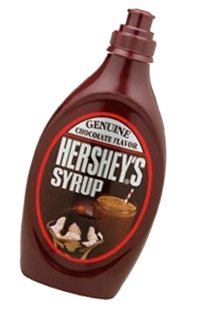
I know that I’m not always faithful about taking my loupes, mask, and gloves off the perfect way, every time, but you better believe that I’m going to be practicing this with chocolate syrup on my gloves the next time I’m in the office.hsyrup

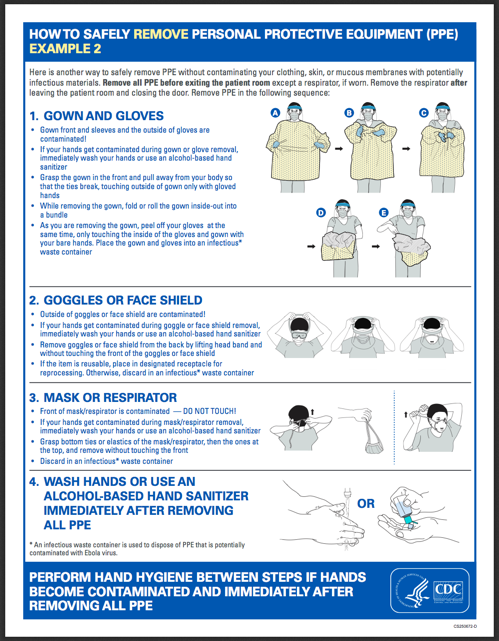
Seriously, maybe it’s time for your team to refresh themselves on how to properly remove their personal protective equipment.

Come on, who wouldn’t want to be in a room full of women (as is the case with most dental teams), passing around a bottle of Hershey’s, adding a little drizzle onto each person’s gloved hands, watching the syrup slick between their latex or nitriled-up fingers, then having them do a striptease routine in front of each other to see if they contaminate themselves?

Believe it or not, this is something that the OSHA recommends. If you’d prefer the CDC’s boring version to practice, though, you can print this PDF out instead:

Click to access the full poster from the CDC

As far as the other scenario? The one where the infectiousness of Ebola is far, far worse than what our sacred Universal Precautions can handle? What DO you say about that? Hey, nice knowing you, I’m changing professions now, love ya, see ya around but not here, bye?

Let’s hope then – for everyone’s sake –  that we have all just been sucking at taking our gloves and masks off.


A blogger since 1997, Trish Walraven, RDH, BSDH is a practicing dental hygienist and marketing manager for an indie dental software development company. She’s now concerned about the effectiveness of the mask she’s currently using in her office but continues to put it on the list of low priorities until the zombies actually come crashing into her operatory.


UPDATE – October 16, 2014:


(Now THIS is more like it!)
ADA American Dental Association
Guidance to Dental Professionals on the Ebola Virus

A person infected with Ebola is not considered contagious until symptoms appear. Due to the virulent nature of the disease, it is highly unlikely that someone with Ebola symptoms will seek dental care when they are severely ill. However, according to the Centers for Disease Control and Prevention and the ADA Division of Science, dental professionals are advised to take a medical history, including a travel history from their patients with symptoms in which a viral infection is suspected.

Any person within 21 days of returning from the West African countries Liberia, Sierra Leone and Guinea may be at risk of having contacted persons infected with Ebola and may not exhibit symptoms. If this is the case, dental professionals are advised to delay routine dental care of the patient until 21 days have elapsed from their trip. Palliative care for serious oral health conditions, dental infections and pain can be provided if necessary after consulting with the patient’s physician and conforming to standard precautions and physical barriers.

You are advised not to treat dental patients if they have the signs and symptoms for Ebola. If a patient is feeling feverish and their travel history indicates they may be at risk of Ebola, dental professionals and staff in contact with the patient should:

• protect themselves by using standard precautions with physical barriers (gowns, masks, face protection, and gloves)
• immediately call 911 on behalf of the patient
• notify the appropriate state or local health department authorities
• ask the health department to provide you and your staff with the most up-to-date guidance on removing and disposing of potentially contaminated materials and equipment, including the physical barriers.

The Ebola virus is spread through direct contact (through broken skin or mucous membranes) with blood and body fluids (urine, feces, saliva, vomit and semen) of a person who is sick with Ebola, or with objects (like needles) that have been contaminated with the virus. Ebola is not spread through the air or by water or, in general, by food. Again, there is no reported risk of transmission of Ebola from asymptomatic infected patients.

Filed Under: News Tagged With: American Dental Association, dental infection control, Dentist ebola, dentistry and ebola, Ebola, PPE breach, universal precautions

*dentist not included (with clear aligners)

September 26, 2014 By Trish Walraven 147 Comments

This post is from the time when SmileDirectClub first began its marketing campaign, from the standpoint of a general dentist’s practice, and the feelings of whether or not online-ordered cosmetic aligners would be taking away market share for dentists.  The reviews are posted below the article, from those who have used the product or who have questions about it. The company declared bankruptcy in 2023. Way to take the money and run!

phototeeth

If you’re not an orthodontist, but you straighten teeth in your dental practice, I’ve got a fistfight just waiting for you. Where? Thankfully someone else went through the trouble of making this cute little scroll-ey infographic, so I’ll just post it here and save myself the trouble, and the punches.

SmileCareClub Wants to Disrupt Dentists- Crowdfunding Insider (no longer available)

(sorry, looks like the infographic wasn’t sanctioned by Smile Care Club… anyways, here’s another link on IndieGogo)

A full set of dental aligners, just like the Invisalign® ones, for a third of the cost or less, can you simply order them online? With no visit to a dental office? Heck, why not? I mean, all you have to do is worm two pieces of putty together and then squish them onto your teeth for an impression, mail them to the lab, upload a few photos from your smartphone, and wait for your trays to magically appear at your doorstep.

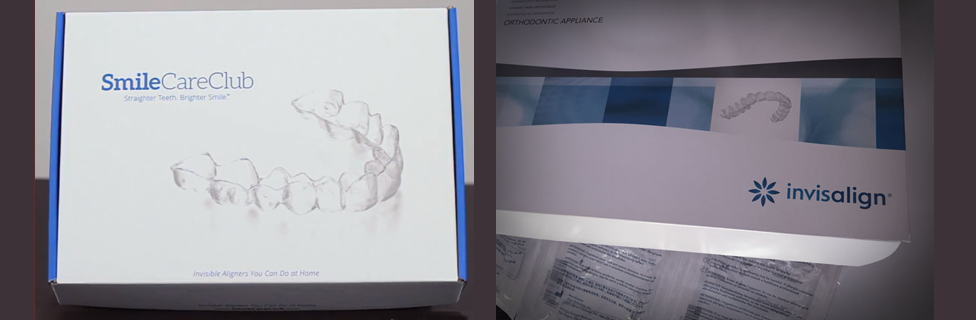
What is it with blue boxes? Is blue, like, a confident color or something? See how the SmileCareClub box compares to an aligner box from our office:

alignerboxes

And then there’s the involvement of the aligner-providing dentist. The ClinCheck inclusion is a facade, a joke? You mean to tell me that the lab could do all of this via 3D imaging and just cut the middleman dentists out of the deal?

Not completely. You’ve got interproximal reductions that still need to be managed in some cases, and the SmileDirectClub is looking for suckers Endorsed Local Providers to saw those big fat teeth into submission. And who the heck knows whatever happened to attachments? I personally had Invisalign attachments placed a decade ago, and cannot imagine what my results would have been without them.

Orthodontists are probably chuckling to themselves. They saw this coming with all of the cosmetic tooth straightening programs being marketed to general dentists over the last decade.

It makes the whole teeth whitening mall kiosk issue seem petty, now, doesn’t it?

SmileCareClub doesn’t appear to have a single dentist on its management team, but they employ a few, I guess, to keep it legal, I guess. It’s really hard to tell. This aligner system is also sold on the Sharper Image website, in case you want to forward a link to any patients who look at you sideways and curse under their breath when you tell them what their in-office aligner treatment is going to cost. Sharper Image– that’s legit, right? Maybe you didn’t realize that the original Sharper Image went bankrupt. Interestingly, the brand name was bought by the same VCs that, guess what?- own SmileDirectClub.

Orthodontists, are you feeling disrupted yet?

I didn’t think so.


A blogger since 1997, Trish Walraven, RDH, BSDH is a practicing dental hygienist and marketing manager for an indie dental software development company. Her mission with DentalBuzz is to offer a fresh podium of discourse for those involved in dentistry and to expose fun in our professional lives.


2015 Update:

SmileCare Club is now called SmileDirectClub, which you can see at SmileDirectClub.com. The cost is $1500, and if you Buy Today!, they’ll include GloScience gel (interestingly enough, here’s what DentalBuzz had to say about GloScience in 2011).


Aug 2016 Update:

Invisalign has announced that they are building aligners for Smile Direct Club. See the notice in the comments below. The similarity of the boxes now makes sense!

2017 Update:

Invisalign now owns a 19% interest in SmileDirectClub. But that kind of backing will cost you $350 more, which now brings the cost of aligner therapy to $1850.

September 2019 Update

Smile Direct Club just had their IPO, and now the founders are billionaires. It’s all about disruption of the status quo, apparently, because if you can afford $80/month instead of $150/month (the cost to see a real orthodontist) you should Do Orthodontics Yourself. Smile Direct Club have no more than 250 dentists that “check” the cases. That’s one dentist per 3000 patients (750,000 people served so far)! Bottom Line? If you think of teeth as ornaments, not functional body parts, then that’s on you if they rot out or you can’t chew with them afterwards. Story here: https://www.bloomberg.com/news/articles/2019-09-13/smiledirectclub-s-ipo-creates-a-pair-of-30-year-old-billionaires

October 2023 Update

Melissa Busch, Dr. Bicuspid.com

Clear aligner company SmileDirectClub filed for voluntary protection under Chapter 11 of the U.S. Bankruptcy Code on September 29 in the U.S. Bankruptcy Court for the Southern District of Texas, according to a company press release.

The bankruptcy comes on the heels of recent legal pitfalls involving SmileDirectClub. In August, a California court confirmed an order requiring the orthodontics company to pay $63 million to Align Technology, a former partner and the maker of Invisalign, over a supply agreement dispute. SmileDirectClub had planned to appeal the decision. 

In June, SmileDirectClub settled a suit with the Washington, DC, attorney general’s office, which claimed the company made injured and dissatisfied customers sign nondisclosure agreements (NDAs) to receive refunds for their clear aligner therapy. Under the terms of the settlement, SmileDirectClub was required to release 17,000 U.S. consumers from provisions in its NDAs. Also, the company had to change its refund policy, notify consumers who previously signed NDAs that they could now freely speak about their experiences, and stop forcing people to sign NDAs that prevented information sharing before refunds were provided.

December 2023 Update

The SmileDirectClub website is gone. You’ll find this message there instead:

Customer FAQ

SmileDirectClub has made the incredibly difficult decision to wind down its global operations, effective immediately. For new customers interested in SmileDirectClub services, thank you for your interest, but aligner treatment is no longer available through our telehealth platform. For existing customers, we apologize for the inconvenience, but customer care support is no longer available. Thank you for your support and letting us improve over 2 million smiles and lives.

I placed an order for SmileDirectClub aligners, but have not yet received my aligners. What should I do?
Unfortunately aligner treatment is no longer available through the SmileDirectClub platform. All orders that have not yet shipped have been cancelled at this time, and you will not receive your aligners.

Should I continue to conduct my 60-day check-ins? Is my treating doctor still available to complete my treatment?
We apologize for the inconvenience, but aligner treatment is no longer available through the SmileDirectClub platform. If you wish to continue treatment outside of our platform, please consult your treating doctor or your local dentist with any questions around future aligner treatment.

I’m on the SmilePay Plan. Do I need to keep paying for my aligners?
HFD is the service provider for your SmilePay payment plan. For questions regarding your financial obligations please contact HFD at 1-877-874-3877, [email protected] or visit their website at www.gohfd.com/.

Is the Lifetime Guarantee still in place?
No. Effective immediately the Lifetime Smile Guarantee no longer exists.

How do I ask for a refund?
There will be more information to come once the bankruptcy process determines next steps and additional measures customers can take.

March 2026 Update

There will be no more updates – this is because the video below that was posted last week follows the timeline above perfectly. As a plus, it’s a well-researched bit of journalism, with all sorts of behind-the-scenes tidbits about what was really going on in the minds of the founders. I heard that the class settlement was paying out about $75 per patient that did complete treatment, so am hopeful that those who did not complete their treatment were compensated better.

SmileDirectClub: The $8.9 Billion Scam That Ruined Smiles

If you were compensated otherwise, had to sign a Non-Disclosure Agreement (NDA), or anything else that still doesn’t sit right with you – please feel free to compare notes with others in the comments below.

Filed Under: Featured, Operative Dentistry, Products Tagged With: Crystal Braces, DIY dentistry, invisalign alternative, SmileCareClub, straightening teeth at home

Is Arestin® a red flag?

September 5, 2014 By Trish Walraven 70 Comments

placementflags
Not long ago, all dental practices were owned by the dentist who took care of you. Sure, they might not have given you any anesthetic before they smashed silver crunchy metal into your cavities, and they may have slapped you around and given you Post Traumatic Stress Disorder any time you thought about opening your mouth wide for anyone, but at least you knew that the dentist shoving their knuckles into your nostrils was the one dictating how things were done around there.

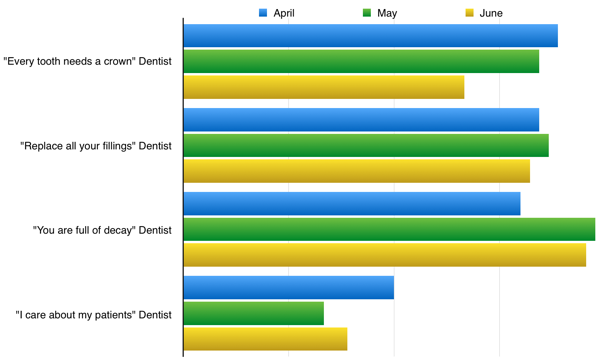
Since then, dentistry has gone all Wal-Mart on the public. There are thousands of dental offices that are part of large chains, where the dentists who take care of you are merely employees, where the quality of dental care provided to patients is secondary and instead the amount of profit generated by each provider becomes the indication of that person’s worth within the company. Can you imagine a leaderboard, like in a sales department, where all the dentists’ production numbers are on display for the entire office, so it’s a race to see who can make the most money?

LeaderboardDental

As a patient, don’t you get giddy at the thought of being ridden like a thoroughbred horse? Me neither. My health is not a commodity.

Dentistry is a little different creature than regular medicine in the sense that TEETH ARE OPTIONAL. You can be a very healthy individual, only with no teeth. It’s kind of like having a hand amputated – your quality of life may be affected, but a hopelessly infected hand should be removed and replaced with a prosthetic. If your body is rejecting your teeth for whatever reason, that’s when there are health concerns as well. Dental professionals make it their life’s work to help you keep your teeth in as close to original condition as possible.

The problem is that when money is involved, you can bet that there are those who will abuse this relationship. There’s scare tactics, there’s bait-and-switch, there’s all the usual sleazy sales pressure used to extract as much income from each patient as possible. New patients often bring us treatment plans that they are unsure of, looking for second opinions, trying to figure out why they don’t trust the previous dental offices’ diagnoses. I just want to say it straight, “They’re taking you for a ride, dear.”

Whip. Whip.

Well crud, I never wanted this article to be an analogy of horse racing with the big hats and Bourbon and milk-drinking and jockeys. So, let’s start over and begin talking instead about Red Flags and Grey Areas.

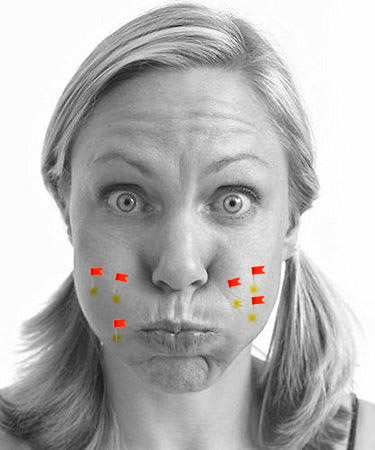
redflag

Red flags, of course, are the signals you get when you realize something that seems good, isn’t so good. Red flags are big fat warning signs.


Greyarea
 

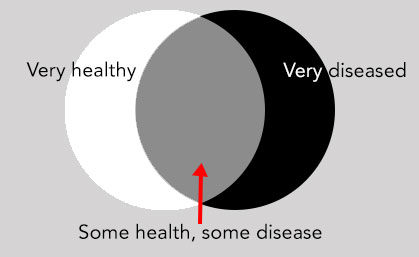
Grey areas, are, well, not really black and not really white.  Grey areas are where black and white kind of blur into each other, and sometimes they end up looking a little suggestive (!) like the image above. Yeah, sorry about how weird that looks when I take it out of context.

When it comes to the health of your mouth we usually look at two things: your teeth, and the stuff that holds your teeth in your mouth. That’s what we’re going to talk about in this discussion, what you think of as your gums. Dental professionals call this part of you your periodontium. If your gums are in excellent condition, you have what is called periodontal health. On the other hand, if your gums are seriously letting go of your teeth you have periodontal disease.


As you can see, the biggest part of this diagram is the Grey Area. This is where most people land, especially if they haven’t been to the dentist in a while. Even if your front teeth are mostly healthy often you’re automatically categorized into the Very Diseased category because you have too many spots in your mouth that are infected with bacteria to treat you as a Very Healthy person. That’s when you’ll get a treatment plan designed to minimize the effects of your disease.

When your mouth is in the Grey Area, this is where treatment recommendations can vary the most from office to office and even from person to person. Almost every dentist will prescribe the same treatment course if your case is black and white (very diseased or very healthy). If you’re in the Grey Area though, this is when Red Flags will start to stick out.

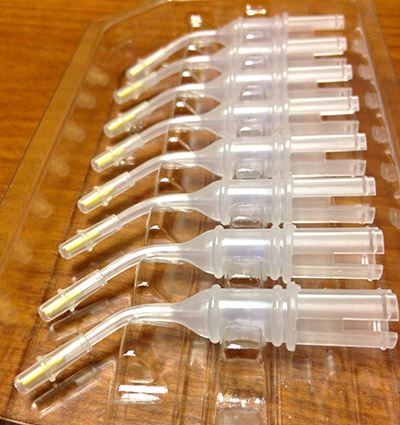
There’s one Red Flag in particular that keeps showing up. Arestin® is a yellow powder containing minocycline microspheres – an antibiotic designed to help diseased gums heal faster. The powder is puffed deep into an infected spot under the gumline where it hardens upon contact with moisture and time-releases the antibiotic for about three weeks. Here’s what the package of cartridges looks like, with the yellow powder in the tip:

cartridges


Arestin is a great product! I’ve seen stubborn gum disease completely disappear when we’ve used it very selectively in our practice. So the Arestin itself isn’t a problem. The problem is how it’s being prescribed.

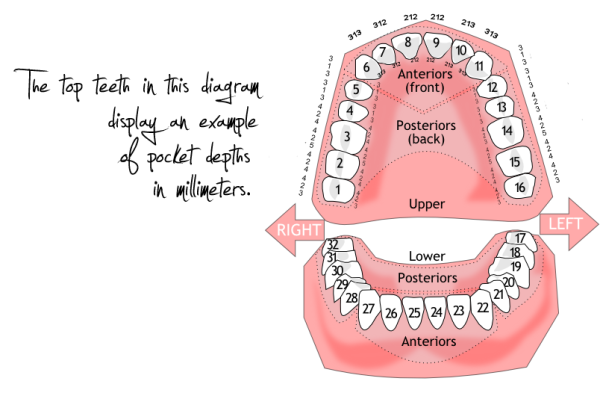
Say you had your gum disease treated with scaling and root planing (a “Deep Cleaning”), but a few spots are still unhealthy a month or two or three later. If your dentist or hygienist sees that you still have open sores that are higher than a certain parameter (over 4mm is considered the standard) this is when Arestin therapy provides the most benefit.probingexample

So when is Arestin a Red Flag? You’ve visited a new dental office, and not only are they recommending that you have treatment for your periodontal disease, they’re also saying you need a course of Arestin to be placed on the same day that you have your initial treatment. It’s even a bigger red flag if you floss regularly and never see your gums bleed.

The thing is, Arestin isn’t cheap. Just a single cartridge costs your dentist upwards of $15. Then there is the insertion fee; in other words, what the patient is billed for placement, and than can run as much as $60 per site.

Here’s where it gets crazy. An average mouth has 28 teeth. Each of your teeth has as many as six sites where Arestin can be placed. Let’s see, that’s $90 in material costs, $360 in placement costs. That’s potentially going to cost you $450 – per tooth.

You’re seeing the big picture now: treating gum disease can be quite profitable! This is why Arestin is such a big deal in the offices that are part of corporate dental chains designed for maximum shareholder profit. This antibiotic is marketed to dental professionals as a way to help us make money, all in the name of “helping our patients.”

So how do you end up getting prescribed Arestin therapy if your mouth is pretty healthy? If your hygienist or dentist was instructed to “force the probe” to create a deep measurement, that’s how. Stab ’em hard and voila! Fake gum disease! Here’s a story that exposes some of the bad things that have allegedly happened in corporate dentistry, including this example:

http://www.pbs.org/dentalworks-chain-misdiagnosed-for-money-dentists-say/

As you can see, lots of other stuff can be exaggerated as well to make sure that the dentistry performed on you is as profitable as possible. For now, though, we’ll stick to talking about the Red Flag, because this one cue may help you decide whether or not you’re being over treated.

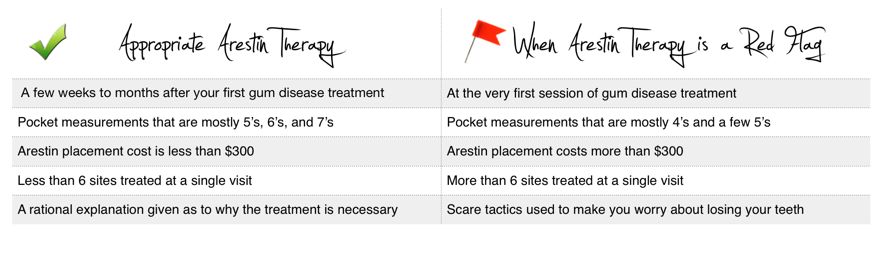
Here are the professionally accepted general guidelines about Arestin usage, then:

Appropriate therapy gridNow please don’t use this to go and bash your well-meaning dentist and hygienist, or the Arestin company, or worst of all, to justify the reasons you tell yourself why you don’t go to the dentist ’cause it’s all one big scam and you can’t trust anyone. Most of us really do want the best for you.

The point is simply this: if more people understand the difference between dental care that is patient-centered and dental care that is profit-centered, then greedy dental corporations are less likely to thrive.

If you think you have ever had this happen to you, I wrote this story for you. For you, so that you don’t feel so dumbfounded the next time you wonder whether or not a dental office is looking out for your health or only for their own. As a hygienist who knows fraud when I see it, I wanted to be sure that patients have a resource to help them defend themselves against predatory practices.

I’d like to end this with a small confession, then: I actually love placing Arestin, because when the dentist and I decide that it’s a good fit for a stubborn case of gum disease, it just feels so right.

So much for being objective.


References and resources:

Explanation of insurance coding of Arestin therapy after initial SRP: http://www.practicebooster.com

An example of Arestin-based fraud in a DHMO: http://caldentalplans.org/downloads/Henderson.pdf

Arestin drug label and study that shows slight improvement of using Arestin with SRP vs. SRP alone: http://dailymed.nlm.nih.gov/arestin

Criticism of Arestin studies and concerns about Arestin therapy : http://periodontist.org/is-arestin-a-therapeutic-treatment-for-reducing-gum-pockets/

A blogger since 1997, Trish Walraven, RDH, BSDH is a practicing dental hygienist and marketing manager for an indie dental software development company. Her mission with DentalBuzz is to offer a fresh podium of discourse for those involved in dentistry and to expose fun in our professional lives.

Filed Under: Anecdotes, Dental Debates, Featured, Money, Operative Dentistry Tagged With: antibiotic use in dentistry, Arestin, corporate dentistry, dental fraud, minocycline, periodontal disease

Phocal fluoride disks

April 25, 2014 By Trish Walraven 2 Comments

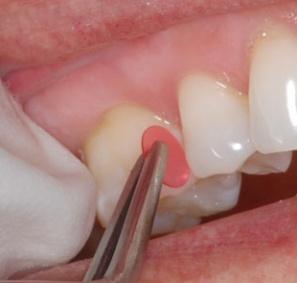
What in the phôc is Phocal? The name is oh-so-clever, the way it changes up the F-sound, pinpoints the precision of its delivery mechanism, adds in a little calcium and acid/base interplay there. Plus, the little disks sorta kinda look like contact lenses. Phocal – the latest in fluoride therapy.

phocal-discs
Phocal disks were brought to market last year, but I just discovered them a few days ago at Hygienetown, one of my favorite online dental hangouts, where they were met with a vague sort of shrug and a huh? Which got me to wondering, why in the world aren’t these things getting more press, more attention, more rave reviews?

Of course! It’s because they haven’t been DentalBuzzed yet.

The few articles that I’ve read about Phocal so far are as exciting as your average WHAT’S NEW IN DENTISTRY dreck. DentalBuzz is here to change that, to present to you all the facts about Phocal Therapy in an entertaining, yet insightful package designed to bring the maximum exposure possible to a product that will sink or swim on its own merit in the end.

Problem #1: Incipient interproximal lesions

If you’re not in dentistry you probably don’t know what these are. Let’s just call them future “Cha-Ching!” You know when dentists take radiographic images inside your mouth with x-rays? They’re looking for cavities between your teeth, where sugar and decaying bacteria ferment into acids that dissolve the surface of enamel into a mass of tiny swiss-cheese chalky goo.

incipient
When an interproximal lesion has gone too far, expect your dentist to drill it, fill it, and bill it (sorry for such a stale joke!). But Phocal disks promise to change all that. These cute little frisbees are designed to be inserted between your teeth (interproximal) before they’ve decayed, at the first sign of a beginning (incipient) cavity, to minimize the damage done to your teeth, as well as to your bank account.

Problem #2: Isocaps

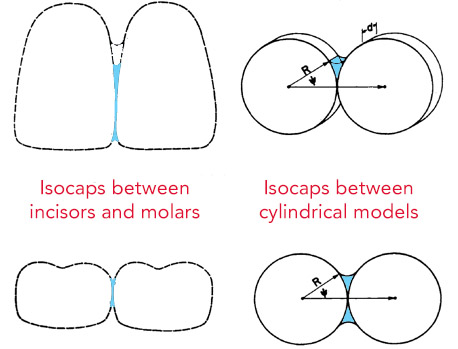
Even many dentists have forgotten what an isocap is, so that’s why I’m going to explain them to you and why a Phocal disk inhibits their formation. Essentially an isocap is a bubble created between two flat surfaces that prevents liquids from wicking into it. Isocaps have to do with capillary action and surface tension.

Isocap1
Most fluoride delivery systems rely on a liquid to get the tooth-strengthening bits to soak deep into dental structure. If you’ve got a bunch of isocap bubbles between your teeth you can see how there’s no way that you’ll get a liquid-based fluoride to wick into the space where it may be needed most.

The Solution: Jam Some Stuff Between Your Teeth

If you can’t penetrate an isocap, well then, just obliterate it, take it out of existence, displace it. Whatever it takes, just put something ELSE there. Fluoride has been proven in many studies to increase the remineralization of a tooth that has begun to weaken, which is why fluoride is the active ingredient in the Phocal disks.

I’d explain how this whole process works, the options available, and even the studies that show how Ah-May-Zing this new fluoride therapy is except that someone at Collident paid a production company to make this perky animated video that does the job for me pretty well. Yes, you DO have three minutes to watch it. And there’s no voice-over, so feel free to turn off your sound before you click the arrow to start it up.


The Obstacles: Price, Chair Time and FDA Approval

What…you were expecting that these disk are THE answer to cavities between our teeth, forever and ever, end of discussion? If they were perfect we’d all have them in our mouths right now. For one thing, they’re not cheap: a box of 20 Phocal disks cost the dentist around $125 – that’s over $6 for each insertion. And because they are “technique sensitive” (read: only an experienced professional can place them) you’ve also got to deal with the dental office overhead fees. As far as the FDA approval goes, as of the time of this publication it appears that the Food and Drug Administration says that the Phocal Disc is unapproved, stating “this drug has not been found by the FDA to be safe and effective, and this labeling has not been approved by the FDA.”

Does this mean, then, that Phocal disks are doomed to obscurity and demise? Not necessarily. Dentists have no problem purchasing a box from the usual channels, but they may not be aware that this therapy exists in the first place, because there are all these flashy things in dentistry that many dentists prefer to spend their time learning about besides prevention. Besides, there’s more money to be made by fixing decayed teeth versus trying to preserve demineralized ones. That’s why the 5th dentist never recommends sugarless gum to his patients who chew gum (!). Cavities keep dentists profitable.

Which is why it’s now YOUR job to ask for Phocal disk therapy the next time your dentist wants to “watch” a spot between your teeth. And that is because watching is a very, very unhealthy type of voyeurism in the dental world.

References:
University of Michigan: Capillary Action around Dental Structures
National Library of Medicine: http://dailymed.nlm.nih.gov/dailymed/Phocalfluoride

Filed Under: Featured, Operative Dentistry, Products Tagged With: Collident, dentist wants to watch a tooth, fluoride disk, fluoride therapy, incipient caries, Phocal, remineralizing teeth

  • « Previous Page
  • 1
  • 2
  • 3
  • 4
  • 5
  • 6
  • …
  • 26
  • Next Page »

About

DentalBuzz explores rising trends in dentistry with its own slant. The speed at which new products and ideas enter the dental field can often outpace our ability to understand just exactly the direction in which we are heading. But somehow, by being a little less serious about dentistry and dental care, we might get closer to making sense of it all.

So yeah, a tongue-in-cheek pun would fit really nicely here, but that would be in bad taste. Never mind, it just happened anyways. Stop reading sidebars already and click on some content instead.

Recent Posts

  • Dry Humor, Wet Biofilm: A DentalBuzz Look at Periodontal Desiccation Therapy
  • Are affordable online nightguards any good?
  • CareCredit: The Easy Way Billionaire Banks Fill Cavities in Their Profits
  • Off-Label and Totally Legal: What the FDA Won’t Say About Fluoride Varnish & SDF
  • Dentists Rejoice over the Leica Camera Tariffs
  • It’s not OK for your dental practice to use free cloud-based communication
  • Patients ask, “Is it safe to go back to the dentist?”
  • Free “return to work guide” from the American Dental Association
  • Why COVID-19 increases your need for contactless payments
  • A virtual care package from worried dental hygienists
  • Lead Aprons feel so good! Here’s why.
  • What is this $&!% on my toothbrush?

Article Archives

Contact Us

Guest columnists are welcome to submit edgy stories that cover new ground (no regurgitations, please!) , or if there's a topic that you'd like to see explored please punch in your best stuff here and see if it ends up sticking to the website.

Follow DentalBuzz on Social Media

  • Facebook
  • Instagram

DentalBuzz Copyright ©2008-2026 • bluenotesoftware.com • All Rights Reserved