• Archives
  • Products
  • Operative Dentistry
  • Dental Team Communication
  • Practice Management
  • News
  • Research
  • Dental Debates

DentalBuzz: a jolt of current

trends, innovations, and quirks of dentistry

  • Home – Latest Buzz
  • Bloglist
  • Indie Dental Showcase
  • Free Dental Timer
  • Practice printables
  • Podcasts

Dry Humor, Wet Biofilm: A DentalBuzz Look at Periodontal Desiccation Therapy

May 7, 2026 By Trish Walraven Leave a Comment

Sci Fi Hygienists destroying a biofilm creature

Every few years, dentistry finds a new way to fight periodontal disease, and every few years the dental community collectively narrow our eyes and says, “Okay, but does it actually work?”

Lately, desiccation therapy products like HybenX or PerioDT have been showing up in more periodontal conversations. Maybe a hygienist in your office came back from a seminar (thank you, Anne Guignon!) ready to dry out every periodontal pocket in sight. If you’re a patient, maybe you’re here because you want to learn more about “that new bacteria treatment thing” you saw online. Honestly, after dealing with enough stubborn 7-millimeter pockets, almost anything that sounds biologically plausible gets people’s attention these days.

Periodontal disease is perpetually frustrating. Deep pockets that can cause teeth to eventually fall out can improve beautifully in one patient and stubbornly linger in the next, despite thorough and frequent deep cleanings (scaling/root planing – SRP), excellent home care, and enough flossing guilt to power a small suburb. Dentistry has spent decades trying to find ways to improve outcomes beyond traditional SRP alone. We have tried local antibiotics, lasers, chlorhexidine chips, peroxide trays, antimicrobial rinses, photodynamic therapy, probiotics, and approximately seven bajillion products containing the words “biofilm disruption”. Now we are drying it out.

At first glance, desiccation therapy sounds slightly dramatic, like something involving tiny industrial fans under the gums, or terror-inducing like a classified bioweapon designed to remove every trace of moisture from human tissue. In reality, products like HybenX and PerioDT are chemical desiccants placed into periodontal pockets before or during SRP. Instead of functioning like antibiotics, they work by dehydrating and disrupting the biofilm matrix itself.

This is interesting, because biofilm is not just bacteria sitting politely on the tooth surface waiting to be removed easily with a daily brushing. It is an organized, sticky protective environment that allows pathogens to thrive while resisting both the body’s immune response and our increasingly creative attempts to evict them.

Desiccation therapy basically attempts to collapse the slime layer so instrumentation can work more effectively afterward. And that is probably why so many hygienists are paying attention. It feels mechanically logical. There’s less of “kill all the bacteria” and more focus on making the neighborhood unlivable.

That also separates it from many of the periodontal adjuncts we have relied on for the last twenty years. Arestin and other localized antibiotics attempt to suppress bacterial growth directly after SRP. Perio Protect approaches the problem from home, asking patients to wear peroxide trays daily over time. Lasers promise bacterial reduction with varying levels of scientific enthusiasm depending on who is presenting the lecture and how expensive the laser was.

Desiccation therapy lands somewhere in the middle. No expensive equipment. No prolonged antibiotic exposure. No hoping patients suddenly develop Olympic-level compliance with home care routines. And that last part matters more than we like to admit.

Perio Protect can work very well for motivated patients, but every hygienist reading this has heard patients swear they’re cleaning their teeth well while staring directly at enough interproximal bleeding to suggest otherwise. Compliance has always been the weak spot in periodontal therapy. The most exquisitely engineered home-care system in the world still depends on a human being deciding to use it consistently after dinner when they are tired and watching Netflix. Desiccation therapy removes that uncertainty. The treatment happens chairside, under clinician control, during the appointment itself.

That does not mean that desiccation therapy is magic.

The research so far is promising, but not definitive. Studies have shown improvements in bleeding reduction and pocket depth when desiccation therapy is used alongside SRP, particularly in deeper or inflamed sites. At the same time, the evidence base is still fairly young. Long-term data is limited, protocols vary, and we are nowhere near the point of calling this standard therapy for every periodontal patient walking through the door. Which is probably exactly where reasonable clinicians should land right now: we should be interested, but not hypnotized.

Desiccant in gingiva

There is also the small matter that these products are not nearly as gentle as some marketing language might imply. The SDS sheets for HybenX and similar products contain repeated warnings about corrosive effects, tissue irritation, and careful handling due to their sulfuric acid and sulfonated phenolic chemistry. This is not simply another tooth gel. Used appropriately, desiccation therapy appears safe and effective as an adjunctive treatment. Used carelessly, it is still a highly acidic chemical agent being placed into inflamed tissue.

That nuance is important because dentistry sometimes struggles to occupy the middle ground between cynicism and infomercial. Every new periodontal adjunct gets treated either like a revolution or a scam, when the reality is usually much less exciting and far more useful.

Most periodontal therapies help a little. Some help certain patients a lot. None exempt us from the fundamentals. Good instrumentation still matters. Maintenance still matters. Smoking, diabetes, xerostomia, stress, medications, and home care still matter. Biofilm remains deeply unimpressed by marketing campaigns and dramatic product names.

Still, desiccation therapy may end up carving out a meaningful place in periodontal care because it approaches the problem differently. Not by adding another antibiotic to the mix, but by disrupting the physical environment that allows pathogenic biofilm to organize itself in the first place.

And honestly, after decades of trying to chemically negotiate with bacteria, there is something deeply satisfying about simply drying out the sleazy slime condo and telling the whole microbial neighborhood to move out.

Congratulations to the bacteria on losing their security deposit.

_____________________________________

Trish Walraven, RDH, BSDH is a dental hygienist, writer, and curious observer of the strange relationship between science, marketing, and what actually happens in periodontal pockets.

____________________________________

Resources

Isola G, Matarese G, Williams RC, et al.
The effects of a desiccant agent in the treatment of chronic periodontitis: a randomized, controlled clinical trial. Clinical Oral Investigations. 2018;22(2):791-800.

One of the better-known studies evaluating desiccation therapy alongside scaling and root planing, showing improvements in clinical and inflammatory outcomes.
https://info.youngspecialties.com/periodt-clinical-study-isola

American Dental Association
Evidence-Based Clinical Practice Guideline on the Nonsurgical Treatment of Chronic Periodontitis by Scaling and Root Planing with or without Adjuncts.
A helpful overview of where adjunctive therapies fit into periodontal care and why SRP remains the foundation of treatment.
https://www.ada.org/resources/research/science/evidence-based-dental-research/nonsurgical-treatment-of-periodontitis-guideline

Vyas T, Bhatt T, Kumar V, et al.
A Local Desiccant Antimicrobial Agent as an Alternative to Adjunctive Antimicrobials in Periodontal Therapy.
A review discussing desiccation therapy, biofilm disruption, and the broader shift away from relying exclusively on antibiotic-based periodontal adjuncts.
https://pmc.ncbi.nlm.nih.gov/articles/PMC10044681/

________

Have you tried desiccation therapy in your practice, or had it recommended as a patient? We would genuinely love to hear what you are seeing in real-world periodontal treatment, so jump into the comments below.

Filed Under: Dental Debates, Featured, Operative Dentistry, Products, Research Tagged With: Biofilm, dental hygiene, Dental Technology, Desiccation Therapy, Gum Disease, HybenX, Non-Surgical Periodontal Therapy, Oral-Systemic Health, Perio Protect, periodontal disease, periodontics, preventive dentistry, Scaling and Root Planing, SRP

Are affordable online nightguards any good?

April 17, 2026 By Trish Walraven 2 Comments

As someone who has been a dental hygienist for over 30 years, and who has personally worn through a drawerful of nightguards, I feel a bit qualified to get a little judgy about whether a nightguard that bypasses the dental office has any real value, is safe to wear, and is actually a reasonable alternative.


How did this even catch my attention?

If you’re like me, your social media eventually figures out what you do for a living and starts targeting you accordingly. A few months ago, mine decided I needed a new nightguard. And honestly, at this point in my life, the algorithm was not entirely wrong.

When I was fresh out of college, the first dentist I worked for pointed out that I had significant wear on the incisals of my canines, especially. I believe his exact sentiment was that what he was seeing was not the teeth of a typical 23-year-old. More like someone in their 40s. Ouch, my vanity did not like that.

That was enough for me to realize I did not want to arrive at my later years with a flat, worn smile with no personality, and a profile where my nose and chin were closing in on each other. So I had my first impressions taken and a lab-made nightguard fabricated, and I have worn one ever since. One of the perks of working in a dental office is that you usually only pay lab fees for appliances like this, which means I have had access to high-quality dental appliances at very good prices for decades.

Fast forward to now. While I’m still a licensed dental hygienist, I am not currently working chairside, which means those perks are gone. So when I started seeing those ads for online custom nightguards, I started clicking on a few.

I ended up at JS Dental Lab (https://jsdentallab.com/) after deciding that theirs seemed the friendliest company to investigate. When I reached out and explained that I write for DentalBuzz, the owner offered me a complimentary nightguard so I could review it. Even though my device was delivered to me at no cost, I went through the same process to get it that any patient would.

Their website walks you through a decision tree to select your guard. Because I am a heavy bruxer, I picked the most badass option they had, which was their Premium 3D 4mm Hard Shield. And when it arrived, my first thought was… this is pretty dainty. Especially compared to the majority of the nightguards I have had in the past. The fit was also different in that there was a higher coverage depth, so the online nightguard covers more of the facial (front) of the teeth.

Why online nightguards might be thinner

This is where it gets important. Online labs have to be conservative. They are not seeing you in person. They are not checking your bite or making adjustments chairside. So they cannot risk making something too thick or too aggressive. If they did, the nightguard then technically becomes a splint, which is a medical device that could cause real problems like:

  • teeth shifting
  • supereruption
  • bite changes
  • TMJ issues

So yes, the online nightguard is thinner than the dentist’s splint in the top image. Noticeably thinner. But that is intentional. They are trying to give you something to grind on without creating new problems. An in-office nightguard is part of a process. It gets checked, adjusted, and followed up on. An online nightguard is a finished product that shows up in the mail and is not as easy to fine tune.

The Biggest Challenge: Taking your own impressions

Here is the part that matters the most: taking your own impressions is hard. Even for me. I spent years making whitening trays for patients. I was very comfortable with alginate. Give me a tray and some pink goo and I was happy all day. I loved pouring the models, waiting until the tray material melted enough to quickly suck it down over the plaster.

This is not that.

The silicone putty they send for you to mix together is different, and getting a clean, accurate impression on yourself is a completely different experience than doing it on a patient, especially if you slobber a lot. In my opinion, JS Dental Lab does everything right on their end:

  • multiple tray sizes
  • extra silicone putty in case you mess up
  • clear instructions
  • no-cost remakes if needed

But still. It took me a few tries to get it right. And that is the biggest limitation of this whole model. Everything depends on the impression.

We have already seen what happens when dentistry tries to go fully remote. Remember all the marketing a few years ago with “do it yourself” orthodontics? SmileDirectClub started with a lot of promise and ended up being a lesson in what happens when business scales faster than clinical oversight. Whoo boy. If you’re up for a little side quest, DentalBuzz originally began snarking about SmileDirectClub in 2014, where you can check up on the latest update that includes a newly posted video documenting their demise.

Now, nightguards are not changing your teeth. They are much lower risk. But the same basic truth applies. Dentistry works best when someone is actually looking at your mouth.

So… Are They Any Good?

Yes. With caveats.

I would recommend an online nightguard if:

  • cost is a concern
  • you just need protection from grinding
  • you are willing to deal with the impression process
  • you understand it may not last as long

JS Dental Lab, specifically, does a really good job with:

  • overall customer service
  • remakes and adjustments
  • covering shipping both ways
  • using materials that are comparable to what you get in a dental office

When it comes to the actual nightguard I received from JS Dental Lab, I don’t have anything to criticize about its quality. The acrylic looks and feels identical to every dentist-made appliance I’ve had over the years. It’s comfortable, stays in all night, and comes out easily in the morning, which is really all I need it to do. And I will say, the case is a nice upgrade. Sleek, silicone-lined, magnetic close. A noticeable step up from the usual retainer cases that dental offices buy in bulk.

You should go to a dentist instead if:

  • you have any pain at all
  • you suspect TMJ issues
  • you want something that will last longer
  • you gag easily
  • you do not want to deal with impressions

The digital scan alone is a huge advantage.

For dental professionals: what do you tell your patients?

Because they are going to ask.

Here’s the answer I’d give:

If a patient with bruxism just needs something to keep them from grinding their teeth down into a flat plane, an online nightguard is a perfectly reasonable option. Especially if cost is the thing standing between them and doing nothing at all.

If there’s pain, joint issues, headaches, bite changes, or anything even hinting at TMJ disorders, they need to stay in the dental office. Full stop. If they want something thicker, longer-lasting, and actually adjusted to their bite, that’s also a dental office situation.

But if it’s truly a choice between some protection vs no protection, I’m picking protection every time.

And one last thing, because it always comes back to this: aesthetics, the quiet fear of aging too soon, and the weight we carry around how our faces change over time.

Bruxism slowly files our teeth down, which quietly steals a little vertical dimension over time. And when that space goes missing, the lower face doesn’t just shrug it off. It settles. Compresses. Gets a little… creased.

Right where your lipstick betrays you by bleeding into those little cracks.

I’m not saying a nightguard is the new anti-aging miracle. I am saying that keeping a little height between our teeth over the years seems to work in our favor.

All these years in, I like my odds.


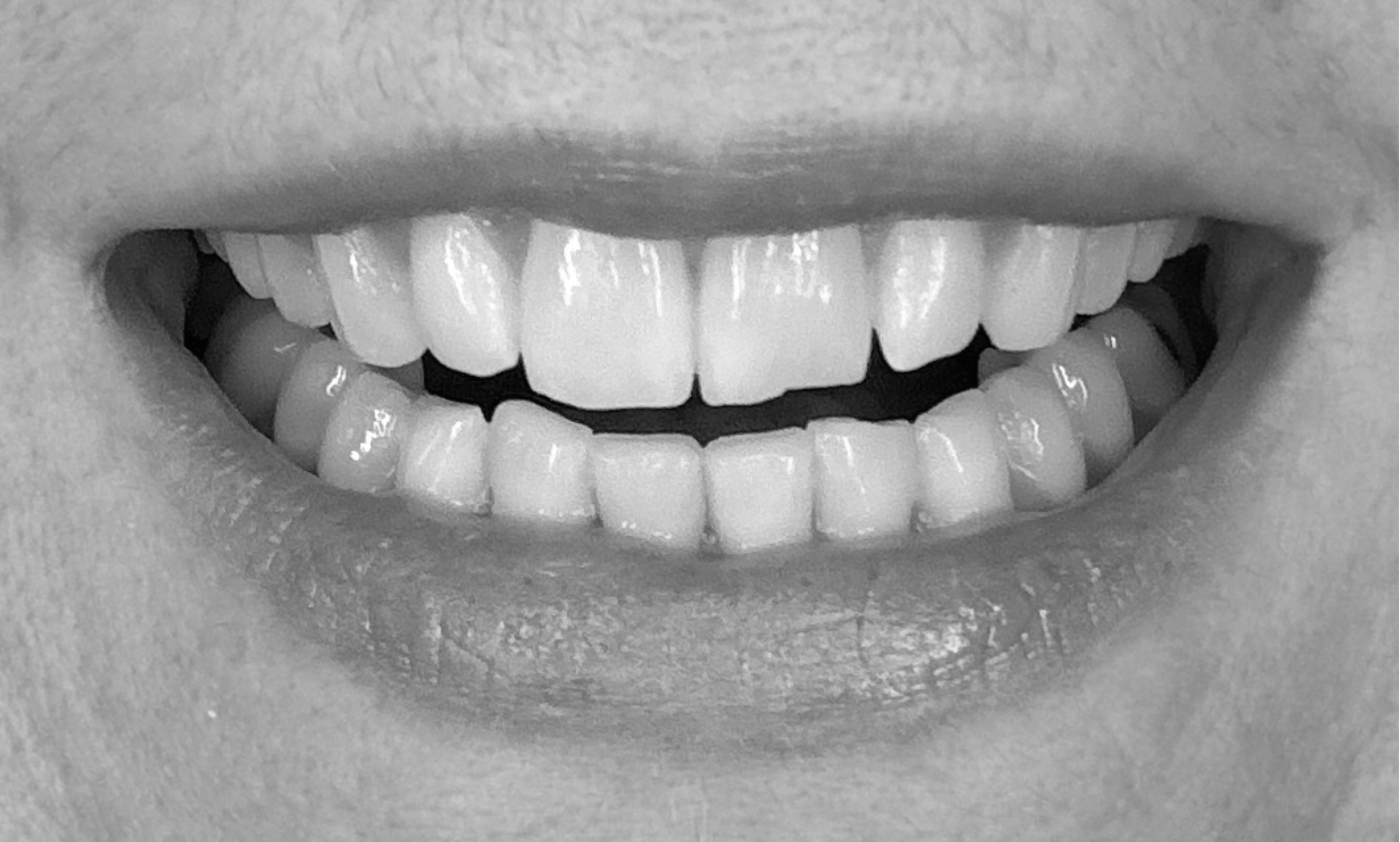
Trish Walraven, BSDH, RDH is a dental hygienist with a lifelong habit of taking her stress out on her teeth at night. She figured she’d go ahead and offer closeup photographic evidence after deciding that, for someone approaching her sixth decade, it could be worse.


References & Further Reading

  • JS Dental Lab Website: https://jsdentallab.com/
  • Occlusal splints and bruxism management (ScienceDirect review Comprehensive review of how nightguards (occlusal splints) are used to reduce tooth wear, muscle activity, and protect the dentition.
  • Clinical overview of occlusal splints and TMD treatment Explains how nightguards are used for bruxism, TMJ disorders, and stabilization of the bite, including their role in maintaining vertical dimension.
  • How occlusal splints protect teeth and reduce grinding damage General clinical explanation of how nightguards act as a protective barrier and reduce symptoms like jaw pain and headaches.
  • Unintended bite changes associated with nightguard use (BDJ review) Discussion of how poorly designed or unmonitored appliances can lead to occlusal changes, reinforcing the value of professional oversight.
  • Digital vs traditional splints and fit accuracy (clinical study) Shows how digitally fabricated appliances can improve fit and consistency, supporting the advantage of in-office scanning.
  • Effects of occlusal splints on vertical dimension and muscle activity Demonstrates that splints can increase vertical dimension and reduce muscle hyperactivity, which is directly related to both function and facial structure.

Filed Under: Featured, Preventive Care, Products Tagged With: affordable dental care, bite protection, bruxism, custom nightguard, dental appliances, dental hygiene, dental impressions, dental nightguards, DIY dental, enamel wear, night guard, occlusal splint, online nightguards, patient education, preventive dentistry, sleep dentistry, teeth grinding, temporomandibular disorder, TMJ, tooth wear

Off-Label and Totally Legal: What the FDA Won’t Say About Fluoride Varnish & SDF

May 29, 2025 By Trish Walraven Leave a Comment

Fluoride Varnish and Silver Diamine Fluoride (SDF)


Let’s play a little game. Imagine your fluoride varnish brush could talk. You pick it up, ready to slather it across the facial and lingual surfaces of your patient’s teeth, and it whispers:

Psst… I’m only here for sensitivity.”

Excuse me? We both know that’s not the real reason you’re using it. You’re using it to prevent cavities. So why the double life?

Not-So-Secret Agents: Fluoride Varnish & SDF

If you work in dentistry, you know there are two magical fluids we love using to fight decay without breaking out the drill: fluoride varnish and silver diamine fluoride (SDF).

But here’s the kicker: neither is FDA-approved for the thing we all use them for – you know, the actual preventing or arresting of cavities. They’ve got their little badges that say, “I’m here to reduce sensitivity,” and that’s it. It’s like hiring a security guard to scare off pigeons and they stop a bank robbery instead. Not exactly their “official” job, but they’re killing it nonetheless.

So… are we doing dentistry wrong?

Not at all. This is what the grown-up version of medicine looks like: off-label use. That means we, as clinicians, are allowed to use products in ways that aren’t specifically written on the packaging, as long as there’s good science behind it and we’re not just winging it with snake oil and hope.

Fluoride varnish has been used off-label for decades to prevent caries. Every major dental organization (ADA, AAPD, CDC) backs it. It’s reimbursed by Medicaid for that purpose in many states. Even pediatricians – outside of a dental setting – are authorized to apply fluoride to children’s teeth under certain medical guidelines. But the label? Still just for hypersensitivity.

Silver diamine fluoride (SDF) – same deal. It got FDA clearance in 2014 for sensitivity. But its real superpower is stopping decay in its tracks. You paint it on a mushy lesion and – bam! – it freezes like Elsa just sang at it. Black, hard, ugly-but-healthy decay. Not glamorous, but incredibly effective, especially for kiddos, elders, and patients who can’t tolerate traditional treatment.

Why not just change the label?

Here’s the not-so-fun part: getting a new FDA indication is expensive. Like, “we could build a small dental school for this money” expensive. Most of the companies that make fluoride varnish and SDF are not Big Pharma. They’re more like Little-To-Medium-Sized Dental Supply. If their product is already being widely used and endorsed for the off-label thing? Why spend millions for a gold sticker that says “Approved”?

Also, if it ain’t broke (and no one’s getting sued), they’re not fixing it.

The ethics and the eyebrow raises

Now, I’m not saying you shouldn’t know what’s on-label and what’s not. It matters. Patients deserve transparency, and we owe it to them to explain why their kid’s teeth are turning black (SDF, looking at you) or why we’re applying fluoride varnish after a cleaning even though they don’t have “sensitive teeth.”

The next time you brush on that fluoride varnish or dab a bit of SDF, give a little nod to its secret identity. Off-label? Definitely. Totally legal? You bet. Cavity-fighting? That’s the plot twist they didn’t print on the package.

TL;DR for your patients (and curious colleagues)

  • Fluoride varnish: FDA says it’s for sensitivity. We use it for cavities.
  • SDF: FDA says it’s for sensitivity. We use it to stop decay cold.
  • Both are off-label for caries, but not off-limits.
  • Science is on our side.
  • No one’s getting arrested. (Except maybe the cavities.)

What’s your take? Are we stretching the label, or just catching up to the science? Will this be one more talking point for those on the anti-fluoride side? Share your thoughts in the comments. 

References

  1. FDA 510(k) Summary for Advantage Arrest (SDF): FDA Clearance Database
  2. ADA Clinical Practice Guidelines for SDF: ADA.org
  3. ADA Topical Fluoride Guidelines: ADA.org
  4. CDC’s Take on Fluoride Varnish: CDC.gov
  5. AAPD Policy on Fluoride Therapy: AAPD.org

Filed Under: Dental Debates, Featured, Operative Dentistry, Preventive Care, Products Tagged With: American Dental Association, cavity prevention, dental controversy, dental hygiene, evidence-based dentistry, FDA approval, fluoride debate, fluoride safety, fluoride varnish, off-label use, preventive dentistry, SDF, silver diamine fluoride

Amabrush (and all other mouthpiece toothbrushes) do NOT clean your teeth in ten seconds

June 27, 2017 By DentalBuzz Staff 24 Comments

Update 10/22/2021: Don’t buy mouthpiece toothbrushes. Not only do they not work, most of them don’t even turn on. It’s an easy way to get people to send money for scammy things. Need more proof? Go to Electric Teeth at the link below – they have much more current information than you’ll find here.

Mouthpiece toothbrushes: think twice before you buy

IMPORTANT UPDATE 6/5/19: The Amabrush is extinct. This article is useless. Scroll to the bottom to learn why.


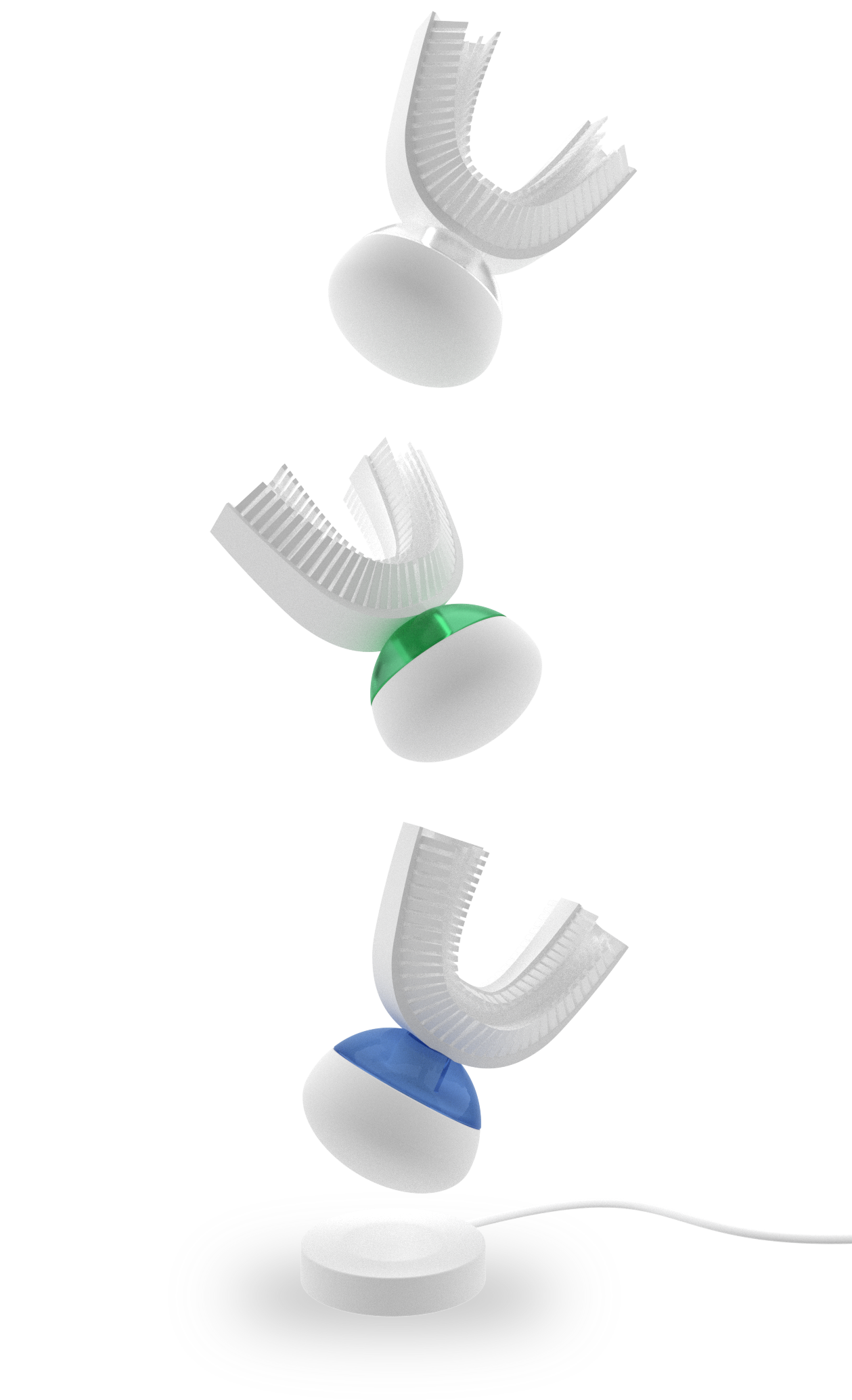
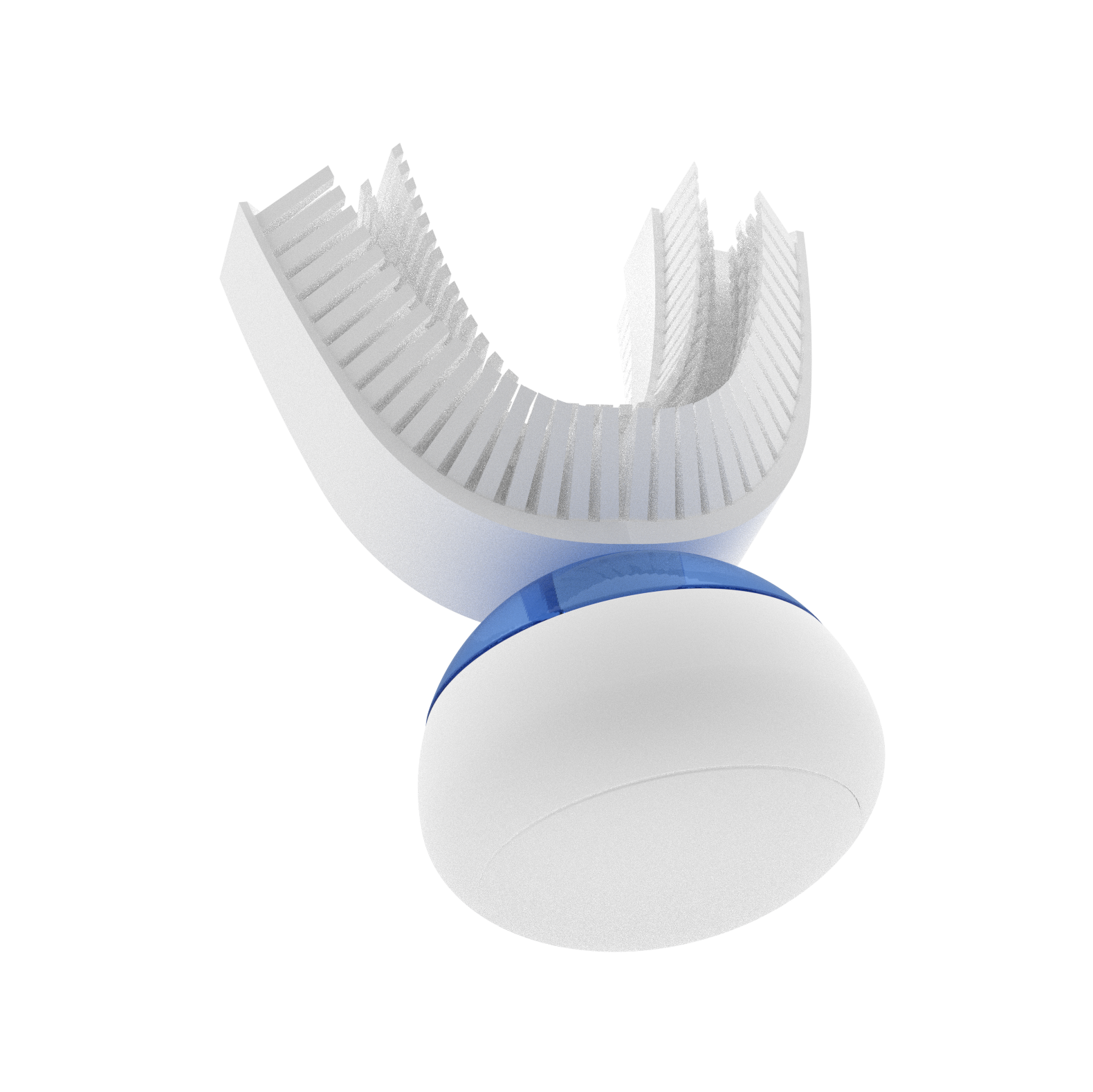
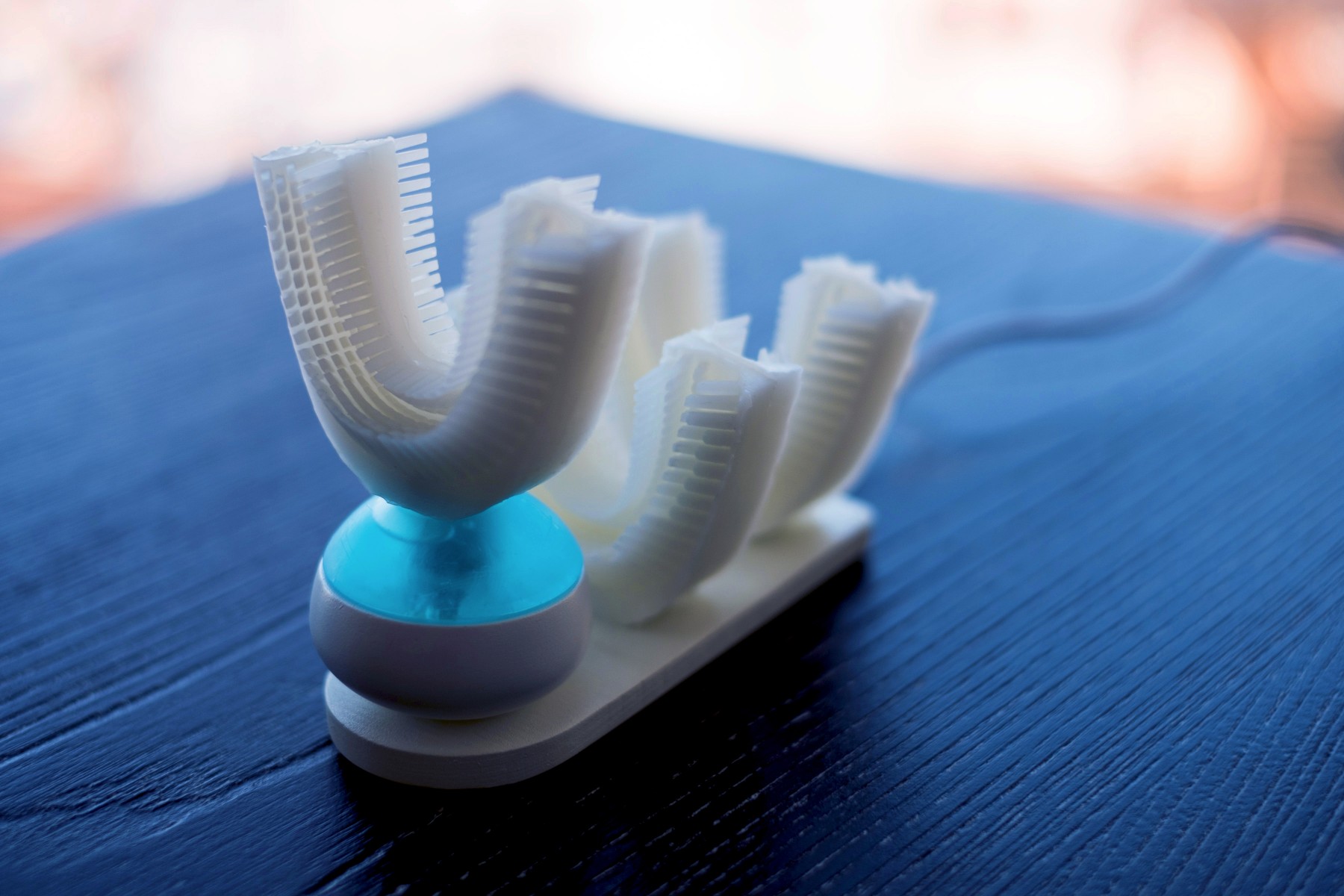
What do you get when you start with a silicone sports mouthguard, embed it with hundreds of tiny bristles, and magnetize a rechargable toothpaste ball that vibrates and cleans all of your teeth at the same time? DentalBuzz recently sat down with the inventor of the new Amabrush to find out where this thing came from, where it’s going, and how to get one.

____

DentalBuzz:  Hi Marvin. Thanks for joining us here at DentalBuzz. What’s the story? Tell us about yourself and your company, how you got into the business of toothbrushing, where the name Amabrush came from.

Marvin Musialek: Thank you for having me! Well, my name is Marvin and I’m the founder of Amabrush, a completely redefined toothbrush. I came up with this idea 6 years ago. I brush my teeth twice a day, not because I want to, but because I have to, and this is every dentist’s advice.

Six years ago I stood in front of the bathroom-mirror as usual, and asked myself, “Why are we on the edge of self-driving cars, but we all still have to stand in front of the mirror and put a stick with nylon-bristles into our mouth, in order to clean our teeth?” Since then I thought about an autonomous cleaning-robot-thingy everyday. Three years later there was still no product like this on the market, and I simply decided to “do it on my own.” I did a lot of research and put a strong team together from many disciplines: dentists, biomedical engineers, physics engineers, electronic engineers and even a psychologist. We had to clarify even the simplest questions with a scientific approach. Why are we brushing our teeth? How should we do it correctly? How much toothpaste? What angle should the bristles have? And so forth. We have been developing Amabrush for the last 3 years and have also received grants from the Austrian Government and the European Commission. With our own money and these grants we were able to finance the cost-intensive development of numerous different prototypes, test-units, pre-production-devices and expert-consultations. Our redefined toothbrush should be seen as a stable and good friend, who takes over an annoying and time-intensive task (toothbrushing) for everyone. So we decided to call it Amabrush, so people who ask “what’s that?” will get their answer: “I’m a brush.”

DB:  Since it doesn’t look like a typical brush, that’s perfect! And endearing. Kind of like the name talks back to you when you say it.

Now, you’re in Austria but also have offices in San Francisco? Before everyone in the United States gets addicted to using your brush, we want to make sure that replacements will be easily available. What percentage of your sales do you see coming to the US once you’re in the retail market?

MM:  Yes that’s right. We estimate that 50% of our sales will take place in Europe, especially in German-speaking Europe (Germany/Austria/Switzerland) and the other 50% will take place in North America, especially in the United States. This coincides with our research and as well with our current subscribers, who are also equally distributed between these two regions. Because of that we want to produce Amabrush in these two different regions in the long run.

DB:  You have subscribers already? For a product that they can’t even get yet?  Okay, so we haven’t even talked about the toothbrush. You’re estimating that its retail price is going to be around $200. While you can’t put a price on good dental health, there have been regular electric toothbrushes in this range for years that have proven not to work any better than the $60 version of the same brand (yes, we’re talking about you, Sonicare). Explain what it is about the Amabrush that puts it far ahead of its competition, and why it is a value at $200.

MM:  Yes indeed. We already got 7000 subscribers within a month, which is really, really great. That proves to us that our community is as excited as we are about a toothbrush that takes over the task of toothbrushing. There are many low-priced electric toothbrushes available, but also many high-priced ones. The cost of Amabrush is more to the mid- and high-range, but the brush itself is really high-end. We had to develop everything from scratch, like the micro-pump that foams the toothpaste, the specially formulated toothpaste itself, and the mouthpiece, which was one of the most complicated parts. Not only because we use an uncommon material (anti-bacterial silicone) with a specific toughness, but also because of the integrated, carefully arranged bristles and the micro-channels that deliver the toothpaste directly to the customers’ teeth.

DB:  This has the potential to change everything we think we have to do to take care of our teeth. A silicone mouthpiece instead of a handle that you hold as you move a small brush around your mouth, brushing every tooth at the same time, Bass method bristle alignment, self-contained toothpaste, sonic vibrations. If this brush is capable of consistent and thorough plaque removal, then you may have just created the holy grail of preventive dentistry. When and where will customers get the Amabrush once they’re available to the general public?

MM:  We have to explain this completely new concept of toothbrushing to people a lot. Amabrush is currently “online-only.”  The simplest way for people to inform themselves about Amabrush is over the internet with our online-shop and our website. But in the long run we definitely want to bring Amabrush into grocery stores and drug stores, because the majority of people still buy personal care products “offline.”

DB:  Do you see an application for people whose hand dexterity is limited?

MM:  Amabrush is definitely also for people with hand disabilities. We developed Amabrush on purpose as a hands-free device, not only that it is as convenient and automatically as possible, but also that there is no barrier in order to use it.

DB:  What does it feel like to use?

MM:  It feels like if someone else brushes your teeth with a soft bristled toothbrush paired with the feeling of a gingival massage.

DB:  So it’s sort of like having your teeth cleaned by a professional? We would imagine that would be pretty effective. What kinds of plaque index scores are you getting; in other words, how well does the Amabrush actually clean compared to manual or other electric toothbrushes?

MM:  That’s true, it does a pretty good job at cleaning your teeth! We’ve had plaque index scores calculated by an independent clinical institution and have been pleased with the results. What’s worth knowing is that Amabrush is not necessarily better than a regular manual or electric toothbrush, because common toothbrushes work good enough if they are used properly. The thing is, Amabrush is way more convenient. You can do so many things wrong with a regular toothbrush, as you have to be highly concentrated for at least 120 seconds each time you brush your teeth. And while brushing, you should use different methods like the Bass method paired with the red-white technique. This is not only time-consuming, but also annoying for most people. Because of this, people usually tend to do something else while brushing their teeth. Furthermore, they put too much pressure on the toothbrush which can damage their gum. What’s more, most of the people don’t brush their teeth long enough. Amabrush cleans your teeth the same every time, with the right technique, and does not depend on your concentration.

DB:  What it sounds like you’re saying is that the problem with electric toothbrushes is that manual ones are just that – they have to be moved around with your hand, so even if they’re the best at what they do, they’ll still miss areas because the human being attached to the hand doesn’t apply the brush properly. The Amabrush provides hands-free brushing at a fraction of the time? Very novel.

Back to your subscribers, then. How can subscribers order the Amabrush? How can I get one as a consumer? What do I need to do?

MM:  Interested customers can subscribe to our newsletter right now on our website. We created a landing-page that explains all relevant information and details about Amabrush and the upcoming Kickstarter campaign. Speaking of which, this will be the first opportunity for our customers to get Amabrush. We will start our crowdfunding-campaign on Kickstarter next week (end of June 2017). Customers have the ability to support our project, and as a return, get Amabrush at a strongly discounted price ($69 instead of $199)!

Regarding your question what the customer needs to do: simply sign up for our newsletter on our website (www.amabrush.com). We will send a reminder with the exact date of our Kickstarter-campaign to all subscribers. When the campaign is live, simply choose a package that suits best for you. All of them are strongly discounted, as this is our way to say “Thank you” to all of our supporters and the community!

DB:  Dentists and dental hygienists are particularly interested in finding new ways like yours to pass on to our patients that help them keep their mouths healthy. Do you have anything more you’d like to say to us?

MM: Our pre-production units are already in the making, in order to be shipped around the globe to various dentists. We highly appreciate feedback and input from every professional expert in order to make Amabrush as perfect as it can be. We are really looking forward to the support of our community!

DB:  Thanks again, Marvin for sharing your story with us, and we sincerely hope that you get all the attention that this Kickstarter campaign deserves.

MM:  We hope that too. Thank you very much for the interview and the great time!


UPDATE 6/28/2017: Amabrush announced today that the launch date for their Kickstarter campaign is next week – July 5, 2017.

UPDATE 7/5/2017: The campaign is now live, with the Amabrush expected to begin shipments in December 2017. This video shows close-up vibrations of the prototype. We imagine that the production version will be even more refined.


UPDATE 8/31/2018: It’s taken quite a bit longer than expected, but today Amabrush announced that they will start to ship brushes very soon. The best part? Their testing suggests that all the hard work means that this is a true 10-second toothbrush and not a gimmick. Here’s what came in the mail:


Many patients took part in our dental studies, which took place on 3 different dates with a minimum interval of 24 hours. The tests were performed and evaluated by independent dentists. Amabrush was tested simultaneously with two different institutions and two different sets of patients.

The TQHPI (Turesky modified Quigley Hein Plaque Index) which we used as the method determines how much plaque was present on the teeth – the lower the value, the less plaque on the teeth.

Test procedure

1.) 24 hours before the test, participants were not allowed to brush their teeth. For the plaque test, the patients chewed plaque disclosing tablets so that the dentist could then determine the initial plaque values (tablet is used to make plaque visible).

2.) Patients had to brush their teeth with a regular manual toothbrush for at least two minutes. The remaining plaque values were determined afterwards.


3.) The same process was repeated for the second appointment one week later, but this time with using the Amabrush instead of the manual toothbrush. Teeth were cleaned for just 10 seconds and the dentist determined the plaque values again.


Results

The plaque index decreased statistically significant and there was no statistically significant difference between Amabrush (with 10 seconds brushing time) compared to a regular manual toothbrush (with roughly 3 minutes brushing time on average).

These results make us truly proud and show us that hard work, clever engineering and patience pays off for all of us. We hope that you also like those results, which we would have never reached without your support, help, and feedback!


Images courtesy of Amabrush™ All rights reserved. This article has been written with no bias towards compensation or commissions. DentalBuzz stories run on ideas, not pay-per-clicks.

Want to know when we post a detailed review of the Amabrush once it’s available and we’ve had a chance to chomp on it? Be sure to subscribe to DentalBuzz by adding your email address and you’ll automatically get notifications each time we add a new article.


FINAL UPDATE 6/5/19: Nevermind.  Amabrush is officially done. No surprise there, unfortunately, because they’ve been propping up their company with delays for the last two years. Here at DentalBuzz, we never even received our super early bird Amabrush. What’s worse though, is our role in this for convincing our readers to invest in the Kickstarter campaign.  At this point, we feel sort of like everyone who invested in Theranos, with their fake blood testing.  Great ideas still depend on that which is physically possible, but Marvin still doesn’t seem to get this! You can read the litany of excuses here from Amabrush: https://www.amabrush.at/blogs/news/important-information-regarding-amabrush-company. Bottom line? We’re sorry, and you still have to brush your teeth for two minutes.

Filed Under: Preventive Care, Products, Technology Tagged With: Amabrush, Amabrush review, dental hygiene, Electric toothbrushes, new health products, oral hygiene, preventive dentistry

About

DentalBuzz explores rising trends in dentistry with its own slant. The speed at which new products and ideas enter the dental field can often outpace our ability to understand just exactly the direction in which we are heading. But somehow, by being a little less serious about dentistry and dental care, we might get closer to making sense of it all.

So yeah, a tongue-in-cheek pun would fit really nicely here, but that would be in bad taste. Never mind, it just happened anyways. Stop reading sidebars already and click on some content instead.

Recent Posts

  • Dry Humor, Wet Biofilm: A DentalBuzz Look at Periodontal Desiccation Therapy
  • Are affordable online nightguards any good?
  • CareCredit: The Easy Way Billionaire Banks Fill Cavities in Their Profits
  • Off-Label and Totally Legal: What the FDA Won’t Say About Fluoride Varnish & SDF
  • Dentists Rejoice over the Leica Camera Tariffs
  • It’s not OK for your dental practice to use free cloud-based communication
  • Patients ask, “Is it safe to go back to the dentist?”
  • Free “return to work guide” from the American Dental Association
  • Why COVID-19 increases your need for contactless payments
  • A virtual care package from worried dental hygienists
  • Lead Aprons feel so good! Here’s why.
  • What is this $&!% on my toothbrush?

Article Archives

Contact Us

Guest columnists are welcome to submit edgy stories that cover new ground (no regurgitations, please!) , or if there's a topic that you'd like to see explored please punch in your best stuff here and see if it ends up sticking to the website.

Follow DentalBuzz on Social Media

  • Facebook
  • Instagram

DentalBuzz Copyright ©2008-2026 • bluenotesoftware.com • All Rights Reserved