• Archives
  • Products
  • Operative Dentistry
  • Dental Team Communication
  • Practice Management
  • News
  • Research
  • Dental Debates

DentalBuzz: a jolt of current

trends, innovations, and quirks of dentistry

  • Home – Latest Buzz
  • Bloglist
  • Indie Dental Showcase
  • Free Dental Timer
  • Practice printables
  • Podcasts

Candy that really fights cavities

February 18, 2016 By Trish Walraven 13 Comments

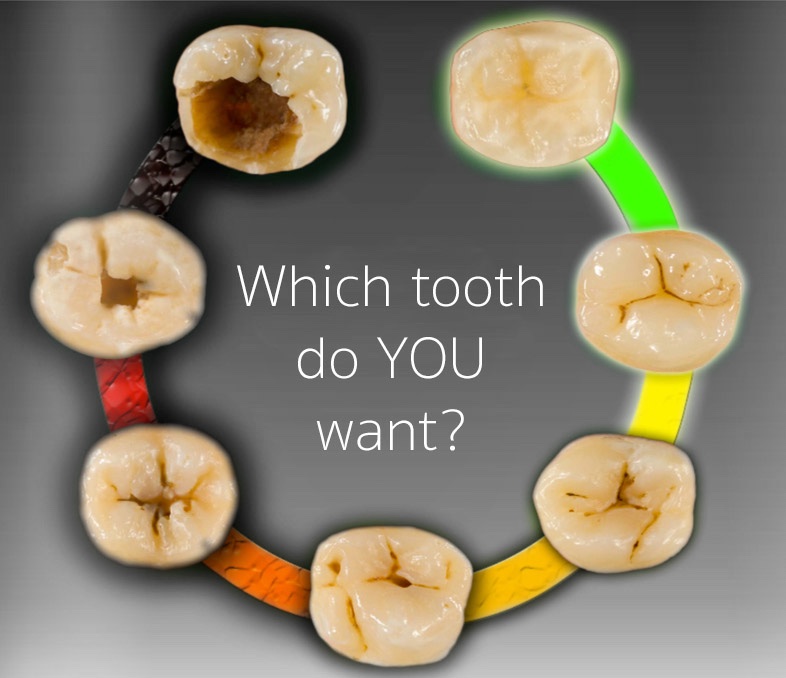
which tooth

Why do you get cavities? It’s not because your teeth are soft. Cavities happen in mouths where the environment is all jacked up. Too much acid, too many germs, an abundance of refined foods, too little saliva. Basically the little ecosystem in your mouth is out of whack.

How do you get it back in balance? You already know some things you can do: eat better, brush and floss better, drink water. Sometimes, though that’s not enough. What do you do between meals? Between brushing?

You change the mouth itself by changing what can grow in there.

One way is with licorice:
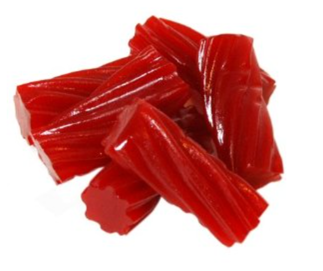
No, that doesn’t count, sorry. It has to be real, tar-black, sugarless licorice. Real licorice contains licorice extract (unfortunately, that’s the stuff that makes it taste way worse than Red Vines).  The way that licorice fights cavities is by changing the mouth environment so that the germs that cause cavities are inhibited.

These are licorice roots:LicoriceRoot

Licorice roots have been around ever since the original hunters and gatherers realized they were sweet-ish, quenched thirst, and tasted much better than most of the other twigs and sticks they used to dig around in their gums and teeth. Maybe they realized their teeth hurt less when they chewed on them, too. Licorice roots contain a compound called glycyrrhizin, which has been proven to reduce tooth decay. They’re cheap, natural, and abundant; you can even buy them here at this link on Amazon.com. But a word of caution: glycyrrhizin can be dangerous in excess amounts. Since licorice root is considered a natural herb, there’s no way for the FDA to regulate the dosage, and too much of it can cause heart arrhythmias, increase blood pressure, and reduce potassium levels.

If your response to black licorice and licorice roots are No, and Hell No, respectively, then how in the heck do you think you’re going to get kids to put licorice extract in their mouths?

Enter capitalism at its finest, folks.
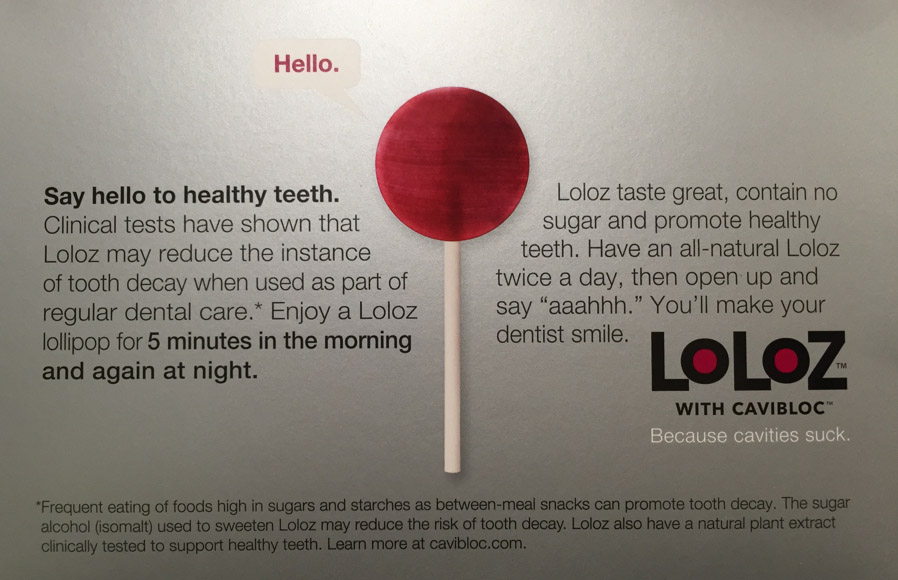
Loloz1

When this company contacted me about a year ago, I was excited to eat free candy write a product review about something that may really help my patients prevent cavities. Remember what I was saying about licorice? Cavibloc™ is the proprietary formulation of licorice extract used in Loloz™ that you can read on their ingredient list here:
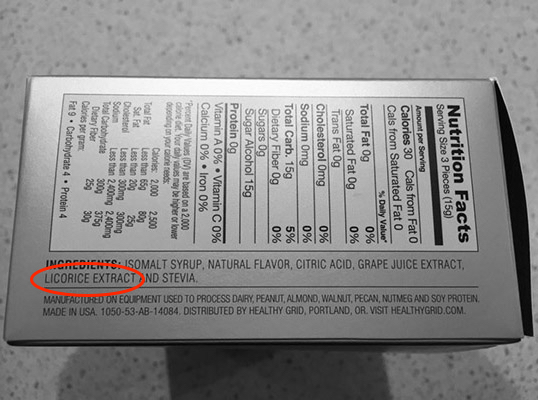
Lolozingredients

How this works

I’ve seen enough studies and listened to tons of lectures from smart people who know what they’re talking about to be convinced that the science is very strong behind using licorice extract in this way to prevent dental cavities. Here’s the biggest problem about it, though:  it doesn’t work if you don’t use it, duh. Follow the steps below to get started on this great cavity prevention regimen:

1. Overcome your objections. Just so you know, I’ve eaten practically a whole box of the berry flavored pops, given them to my kids and friends of my kids, and they taste good. Really good. No problem on the flavor at all. Also, it will cost about $90/year for three boxes. Those are the big obstacles. Everything after this is easy.

2. Buy your boxes at Amazon.com. Lookie, it even comes with Amazon Prime! Here are your flavor choices (and by the way, these are NOT affiliate links – I’m not making any money off of this, just in case you doubt my sincerity):

Loloz Berry Lollipops

Loloz Orange Lollipops

Loloz Lemon Lollipops

For people who aren’t into the whole “stick hanging out of your mouth” thing, there are candy lozenges, too:

Loloz Berry Candy

Loloz Orange Candy

Loloz Lemon Candy

3. Open up your box when it arrives.

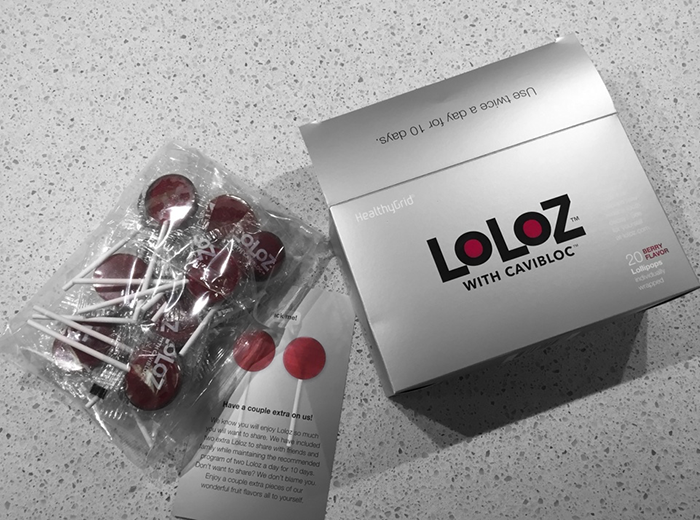
Loloz2You’ll get 20 suckers per box… but maybe they’ll throw in a few for a bonus, with a note to let you know they didn’t count wrong. Maybe eat one of the extra ones as soon as you get them, to make sure you’re going to like them. Then…

4. Put them in the car. What? Following the recommended regimen is the most important part. It takes about 10 days of consecutive exposure time for licorice extract to disrupt the germs that cause cavities. And not just once per day. Two times per day for ten days. You’ll want to have one sucker in the morning, one in the evening. But how do you remember to have two per day? You and your kids (if you take them to school and/or work) are in your car at least twice per day. Maybe you don’t actually leave the lollipops in the car because they may get icky gooey on hot days. But you know what I mean. Discipline yourself to make sure you’re using them two times per day.

5. Repeat in 4 months. You’ll do this about three times per year for excellent cavity control, plus you get to feel good about eating candy. Whee! Over time, the bad bacteria will start creeping back in, but starting up another 10-day treatment in 3 to 4 months will help balance out the mouth environment once again.  People who get cavities easily need licorice root extract. It’s just that simple. If you’ve ever been given a prescription for high fluoride toothpaste, Loloz are for you.

So you may be asking yourself, why no one else is talking about this, why there might not be a lot of Amazon reviews on Loloz, it must not be any good, right? No, that’s not it. The company made a big push a year ago to get the word out, but marketing these days is a tricky thing for new companies. I am confident that the product is spot-on, and I’m here to reinforce again to you that balancing your mouth environment is one of the most important things you can do to prevent cavities. There are other ways to reduce tooth decay, but right now Loloz are your best bet for obtaining a proven, long-term, dose-controlled antimicrobial effect against decay-causing bacteria. And if you’re a dentist or hygienist who is thinking about recommending this to your patients, remember:

COMPLIANCE IS EVERYTHING!

…She says, with a delicious, sugar-free Loloz lollipop in her mouth.


trishlollyTrish Walraven RDH, BSDH is a mom and practicing dental hygienist in the suburbs of Dallas, Texas. She has a very, very bad sweet tooth and doesn’t take money from companies like Loloz because she’s afraid they would give her a lifetime supply of sugarless candy which would be no fun because, hey, if it’s good for you, the days of living dangerously from sugar highs just go phhhht. gone.


 Resources and References:

International Journal of Pharma and Bio Sciences, January 2015. “Assessing the effectiveness of liquorice root extract lollopop in reducing the S. mutans count in saliva in children aged 6-12 yrs – a pilot study.” http://www.ijpbs.net/cms/php/upload/4020_pdf.pdf

European Academy of Pediatric Dentistry, December 2010. “Clinical reduction of S. mutans in pre-school children using a novel liquorice root extract lollipop: a pilot study.” http://www.ncbi.nlm.nih.gov/pubmed/21108917

Medscape, January 2012. “Licorice Root May Cut Cavities, Gum Disease.” http://www.medscape.com/viewarticle/756532

John C. Comisi, DDS, MAGD, April 2013. “Employing a whole-patient approach to the lifelong struggle of caries management.” http://www.dentalaegis.com/id/2013/04/oral-disease-the-battle-for-balance

British Dental Journal, December 2009. “Liquorice Alert.” http://www.nature.com/bdj/journal/v207/n11/full/sj.bdj.2009.1090.html
Filed Under: Featured, Marketing, Preventive Care, Products Tagged With: cavity prevention, dental decay, licorice extract, licorice lollipops, licorice root, Loloz, sugar-free candy

Battlebots: American Eagle vs Hu-Friedy

July 16, 2015 By Trish Walraven 9 Comments

Do you want to see a secret video of one dental hygiene instrument killing another? Sure you do.

But first, a confession: It’s not really secret. This video has been on YouTube since May of 2013 but as of the time I’m writing this it’s had less than a thousand views. I find it to be pretty scathing.

How can a video about dental curettes be scathing?

Because it challenged my opinion about my beloved Hu-Friedy instruments, that’s how.

As hygienists, we’ve been taught to “click” calculus deposits off of teeth. If you have a traditional stainless steel instrument, it needs to be sharp so that it can dig into the deposit, right? Right.

There’s sharp, and there’s hard. Sharpness is what gets you “clicking” the calculus off.  Hardness is… well, it can shift your whole method of OMG YOU WANT ME TO SHAVE WHAT? instrumentation.

We’ll get back to shaving and being hard in a little bit. (!) What I want you to do now though is to watch the video below so that you can understand the rest of this post (just please ignore the first 40 seconds of suck):

What just happened there? Pretty simply, there’s this thing called the Rockwell C hardness scale that measures the hardness of metal, it’s on a scale of 1-100, and when cryogenically-processed steel with a hardness of 60 meets plasma spray-coated steel with a hardness of 89, the softer metal is going to get damaged. That TOOL done got OWNED.

And why does this matter now? These two curettes, one made by American Eagle Instruments and the other by Hu-Friedy, are apparently in direct competition with one another, and Hu-Friedy is making a big stink about the claim that American Eagle’s instruments are sharper.

“Mine are sharper!”

“No, Mine are!”

It’s like that. You can pretty much ignore both sides, and take the marketing for what it is. LOOK AT MY SHINY NEW STUFF IT’S THE BEST (i love youuuuu).

Whatever. Especially the I Love You part. So, you remember Nevi 4, right? – the Traveling Plushie Scaler?

nevi4trishmolly

here I am hanging with Nevi and my co-hygienist at the ADA meeting in Vegas.

My mini-Nevi watching TV with his buds like he does sometimes.

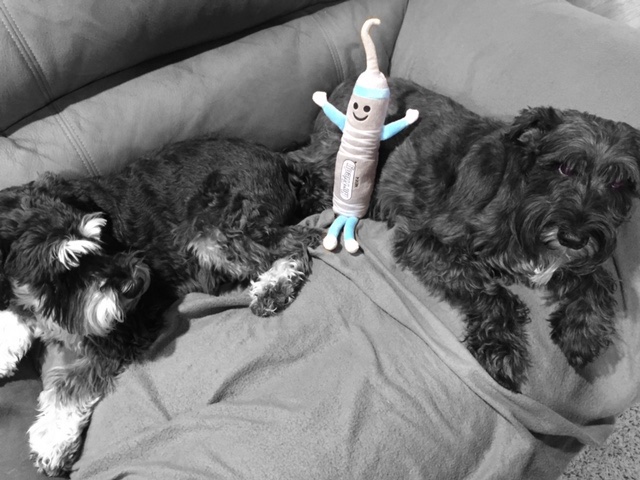
No, I will NOT be posting the photos from that crazy after-party thing that happened with all Nevi’s friends – you know, the Travelocity roaming gnome, Chester Cheetah, the Noid, Stefon from SNL, yeah, that crowd – because I’m not going to give you blackmail material on me like that. But I did just make you look at a picture of my cutsie wootsie doggies, aren’t they just the most adorable schnauzers ever?

Anyways….

So yes, I understand the loyalty thing we’re supposed to have with a company like Hu-Friedy that respects hygienists and is nice to us and is the market leader and the oldest in the business. But sometimes, a product comes along that is actually different enough to give it a chance.

I’m going to say it. I think harder is better.  (shut up, the person who just muttered “you would.”)

Step to the left, Nevi plushie. You have your soft place in the world, and American Eagle XP has its place as well.

What I’ve noticed with using the XP instruments and their hard coating is that the texture of calculus feels really different. Like, it’s softer. Like, I don’t click it off. I shave it off.

SHAVE.

Shaving teeth instead of scaling? It’s really, really weird, but I like it. Who ever thought that you could slice through calculus like you’re carving a turkey? But it feels like that. Instead of biting off the whole chunk of tartar at once, the XP technology lets you lighten up your touch in an entirely different way than you do with even the sharpest stainless steel instrument.

Now, there is a down side to owning American Eagle XP instruments over traditional stainless steel ones – you have to baby them a little more because they can bang up against each other and shorten their lives. That part irks me, of course, because not only do I not want to have to put my instruments in cassettes, I don’t want to ever have to sharpen them either like you do with the Hu-Friedy EverEdge. I’m stuck somewhere in the middle.

And yeah, there’s that “sharp” thing again.

According to the study that was released yesterday by Hu-Friedy, compared to American Eagle XP instruments the Hu-Friedy EverEdge instruments will always be sharper. Also they launched the claim that XP instruments wear out faster because they aren’t able to be sharpened.

Does this mean Hu-Friedy is fighting back?

Well good then. That means they’re probably feeling threatened by a smaller, newer company, and competition is better for progress. It’s good for us because it means that we get to evaluate free instruments from both Hu-Friedy and American Eagle. And good for dental hygiene as a whole, too, because you’re not going to let a little emotion of loyalty get in the way of some good old-fashioned brawling to win your business. You’re free to explore all your options.

Let the metal shavings fly, and you know what they say about having competition, right? Steel sharpens steel. Iron sharpens iron.

And may we all have better instruments for it.


A blogger since 1997, Trish Walraven, RDH, BSDH is a practicing dental hygienist in the suburbs of Dallas, Texas and marketing manager for BlueNote Communicator, software that keeps dentists running on time for their hygiene checks. She’s having to take back the “harder is better” comment now with her new mattress. Oops.


References:

Hu-Friedy Commissions Independent Study to Evaluate Scaler Sharpness:
http://www.enhancedonlinenews.com/news/eon/20150715006545/en/sharp/scaler/dental 

RDH Magazine: No More Dull Instruments!
http://www.rdhmag.com/articles/print/volume-32/issue-5/features/no-more-dull-instruments.html

The Uncoated Truth:
https://www.hu-friedy.com/TheUncoatedTruth

RDH Magazine: How instruments increase productivity
http://www.rdhmag.com/articles/print/volume-33/issue-4/features/how-instruments-increase-productivity.html

That was cool, right? The shaving thing? Be sure to share this video with everyone that didn’t realize that SHAVING is what XP is all about.

Filed Under: Dental Debates, Featured, Instruments

Dental Sitcom for “The Office” fans

March 20, 2015 By Trish Walraven 2 Comments

Our almost-18-year-old son has seen every episode of “The Office” and “Parks & Recreation.” While I haven’t watched either show with any sort of faithfulness, one film that I’ve personally learned a thing or two from is “A Clockwork Orange.” Suffice it to say, our son has had his eyes propped open seen all the available episodes of this Web series and exhibits the appropriate Pavlovian response now to the dental version of this sort of comedy.

Welcome to Episode 1 of Word of Mouth: Hiring a Practice Management Consultant

You have seven minutes to watch an episode, right? Sure, the writers aren’t blazing new comedy contrails, but the acting is decent and the shticks, while predictable, are even funny. Come on, it’s dental humor – there’s not too much of it around so take what you can get.

If you want more, there are four additional episodes of Word Of Mouth available here in the coming weeks. Who wins as Mascot? Toothy or Flossy?

Toothy, probably, because at least he’s less likely to kill you.

Filed Under: Fun, Humor Tagged With: "The Office", dental humor, Dental Sitcom, Web Comedy, Word of Mouth

Great dental practices are run like great kitchens

February 26, 2015 By Trish Walraven 5 Comments

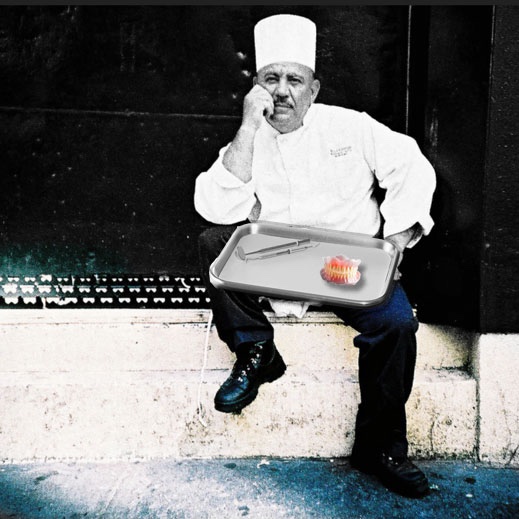
chefdentist

If you are well-aware that your office needs some improvements when it comes to knowing when patients arrive, when dentists need to get their BUTTS MOVING TOWARDS A HYGIENE CHECK, if you’d like to not have to ask “pretty please” any time you need an assistant to visit your operatory, or you just need to scream with your fingers to everyone in the practice because an appointment isn’t going well, I can help. Click here on this BlueNote Communicator link, or in the Sponsor box on the right. Please don’t send money or your Visa card number, just use the software in your practice for free for a month, and work with it to bring out a little of the magic that I’m going to spend the rest of this article talking about. You see, it’s the magic that’s really the most important here, not the way you make it, after all.

____________

You probably already have some good work habits and routines in your practice, and you’ve realized that the efficiency you’ve gained from those routines gives you a feeling of having it all together. Until you realize that you don’t. This is because you are part of a group of people that are dependent upon one another to get stuff done. You each have your good moments and your weak ones, and sometimes you’re so focused on the details of your own job that it can be tough to remember that they must fit in seamlessly with everyone else’s details. Otherwise the patient ends up with a cold steak.

I’m going to pick up that random cold steak now and drop it into the metaphor of a dental office being like a fine culinary experience. Weird, yes, but work with me here. The inspiration for this article all started after I heard this radio story about mise-en-place, a French phrase used in the cooking arts that refers to the gathering and arranging of ingredients and tools needed beforehand. What struck me is that mise-en-place, for many people in culinary institutes, becomes the way they relate to the world. They organize not only their kitchens, but their closets, their desks, their entire lives around the philosophy that those things that are reached for most often are the most strategically placed. It becomes an obsession, almost. Here’s the part of the story that really grabbed my attention:

“A chef, because of mise-en-place, he’s always on time,” says Andre Soltner, dean of the International Culinary Center in New York City. He demands the same kind of efficiency outside his kitchen. “If I go to the doctor, and if he’s not ready, I leave. And that’s because of mise-en-place.”

Ouch. What a sucky reason to lose patients. The reality is that, if people are picky about the temperature of their steak, imagine how bent out of shape those same people would be about the quality of care they receive in a dental practice.

You’re probably thinking that you don’t want to have to deal with PITA patients like that because who really walks out on a doctor for being ten minutes late? But the problem isn’t them. We train our patients to expect mediocrity when it comes to being on time. The issue isn’t really about being late either. It’s about getting into that wonderful flow that decreases anxiety levels so that you actually enjoy being part of dentistry and taking care of people.

Busy kitchens have to orchestrate all of their actions to synchronize the plating of a dish without being chaotic. Every movement is deliberate and necessary, there’s no gravy on the floor, and it all has to happen behind the scenes. Diners only see the seamless completion of their meal as it is presented to them. That flawless execution means that, hey boss, we all did our jobs, and we did them together! How does this happen?

By having systems. You’ve probably got these already so I’m not going to play Practice Management Consultant with you today.  What I am going to emphasize, though, is that, like a great kitchen, your practice can calmly see many patients at once without ever getting crazy, and that’s when you’ll know that your systems are working.

Dr. Michael Ling states this better than I ever could:

“In a restaurant there are no small jobs. Every person has their place in a bigger system. It doesn’t matter if I am working the grill and cook the steak perfectly if the system breaks down and the guy making the veg isn’t ready at the same time. The plate goes out cold and the customer is disappointed. And do you know why the guy cooking the steak can do it so effortlessly? Because he was set up by the teammates and the steps in the system that preceded putting the meat to the fire – the meat was butchered to the exact thickness he requires, it’s stored in the right place at the right temperature, his grill is clean and set up, and he knows from experience that if everything is set up properly, 3 minutes each side equals perfectly medium rare. If the grill wasn’t cleaned properly and doesn’t get hot enough, or the guy cutting the steak gets sloppy and starts cutting 2.25 inch pieces instead of 2.0 inches, the whole system falls apart.

“Your practice systems are the recipes of your ‘kitchen’. There is a little room for creativity and improvisation, but if you don’t follow your part of the recipe closely, then you let down everyone else counting on you and the dish fails. If you don’t communicate how your part of the dish is going, your teammates won’t have the opportunity to adjust, and the dish fails.

longkitchen

“So that is why I love taking my staff to dinner at restaurants with open kitchens whenever possible. It’s a great way to get the message across about teamwork, communication, attention to tiny details, and the fact that following rigid systems (or recipes) doesn’t necessarily mean doing things without passion and energy.

“Start with some small talk, joking around, have a few drinks to loosen everyone up. And then steer the conversation towards work, or how the conference was that day, what we liked or didn’t like, etc. And then I take control of the conversation and explain to them why we are there. How our office is a lot like this restaurant. Our patients have very high expectations, and there are a million moving parts that have to come together behind the scenes to pull it off. Patients never really appreciate how much we care and how hard we work, just like as restaurant customers we just want to enjoy our steak, we don’t give a sh— how hard it was to make it. As we watch the cooks work, I point out the different stations in the kitchen and how each of them is focused 90% on executing their portion of the dish to perfection, and 10% to what is going on around them and how their portion is going to fit with everyone else. They constantly communicate about where they are, what is coming next, and how much time they are going to need. If you don’t pay enough attention to what you are doing, your work gets sloppy. If you pay too much attention and get tunnel vision, your portion turns out perfectly, but you miss out on how it fits with everyone else, and ultimately the dish fails.

“I’ll look at one of the plates served to us, and ask one of my team how long it would take them to cook this dish at home. And why is it that this kitchen was able to push this dish out perfectly in only 10 minutes? It’s all about systems, being confident that everyone on the team is following the same systems, and having everything prepared and at your fingertips. Cooking is so much easier and faster if you have everything prepped and ready to go, mise-en-place as they say. Aren’t there ways that we as a dental team can prep for our day, instead of scrambling at the last second?

“The restaurant is another really good way of emphasizing the importance of teamwork, systems, communication, etc. And oh, by the way, you usually get a kick ass meal out of it too.”

What do I want you to get out of this article? Probably the realization that you have some systems in your practice that aren’t working. Change them. Bring in new ones. Discover what mise-en-place can do to close the gaps in your office flow and maybe you’ll discover your own magic recipe for greatness, served on a plate piled high with quality care for your patients, more time to do the things that matter, and maybe even a little extra income as the sprinkles.

The other takeaway? It’s time to invite everyone out to dinner.

Filed Under: Featured, Practice Management, Software Tagged With: dental communication, dental software, intraoffice communication, mise en place, organizing a dental practice, running a dental office like a restaurant

Toothpaste can do more harm than good

December 30, 2014 By Trish Walraven 77 Comments

wrongTP

The next time a patient innocently asks me, “What’s the best toothpaste to use?” I’m going to unleash a whole Chunky Soup can of “You Want The Truth? You CAN’T HANDLE THE TRUTH!!!” Gosh, that’s such an overused movie quote. Sorry about that, but still.

If you’re a dental professional, isn’t this the most annoying question you get, day after day? Do you even care which toothpaste your patients use?

No. You don’t. Asking a dentist what toothpaste to use is like asking your physician which bar of soap or body scrub you should use to clean your skin. Your dentist and dental hygienist have never seen a tube of toothpaste that singlehandedly improves the health of all patients in their practice, and the reason is simple:

Toothpaste is a cosmetic.

We brush our teeth so that out mouths no longer taste like… mouth. Mouth tastes gross, right? It tastes like putrefied skin. It tastes like tongue cheese. It tastes like Cream of Barf.

On the other hand, toothpaste has been exquisitely designed to bring you a brisk rush of York Peppermint Patty, or Triple Cinnamon Heaven, or whatever flavor that drives those tubes off of the shelves in the confusing dental aisle of your local supermarket or drugstore.

yuckpaste

Toothpaste definitely tastes better than Cream of Barf. And that’s why you use it. Not because it’s good for you. You use toothpaste because it tastes good, and because it makes you accept your mouth as part of your face again.

From a marketing perspective, all of the other things that are in your toothpaste are in there to give it additional perceived value. So let’s deconstruct these ingredients, shall we?

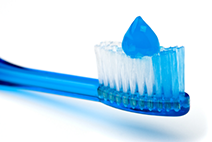
cavprotecttooth

1. Fluoride.

This was probably the first additive to toothpaste that brought it under the jurisdiction of the Food & Drug Administration and made toothpaste part drug, part cosmetic. Over time, a fluoride toothpaste can improve the strength of teeth, but the fluoride itself does nothing to make teeth cleaner. Some people are scared of fluoride so they don’t use it. Their choice. Professionally speaking, I know that the benefits of a fluoride additive far outweigh the risks.

2. Foam.

Sodium Lauryl Sulfate is soap. Soap has a creamy, thick texture that American tongues especially like and equate to the feeling of cleanliness. There’s not enough surfactant, though, in toothpaste foam to break up the goo that grows on your teeth. If these bubbles scrubbed, you’d better believe that they would also scrub your delicate gum tissues into a bloody pulp.

3. Abrasive particles.

Most toothpastes use hydrated silica as the grit that polishes teeth. You’re probably most familiar with it as the clear beady stuff in the “Do Not Eat” packets. Depending on the size and shape of the particles, silica is the whitening ingredient in most whitening toothpastes. But whitening toothpaste cannot get your teeth any whiter than a professional dental polishing, because it only cleans the surface. Two weeks to a whiter smile? How about 30 minutes with your hygienist? It’s much more efficient and less harsh.

4. Desensitizers.

Teeth that are sensitive to hot, cold, sweets, or a combination can benefit from the addition of potassium nitrate or stannous fluoride to a toothpaste. This is more of a palliative treatment, when the pain is the problem. Good old Time will usually make teeth feel better, too, unless the pain is coming from a cavity. Yeah, I’m talking to you, the person who is trying to heal the hole in their tooth with Sensodyne.

5. Tartar control.

It burns! It burns! If your toothpaste has a particular biting flavor, it might contain tetrasodium pyrophosphate, an ingredient that is supposed to keep calcium phosphate salts (tartar, or calculus) from fossilizing on the back of your lower front teeth. A little tartar on your teeth doesn’t harm you unless it gets really thick and you can no longer keep it clean. One problem with tartar control toothpastes is that in order for the active ingredient to work, it has to be dissolved in a stronger detergent than usual, which can affect people that are sensitive to a high pH.

6. Triclosan.

This antimicrobial is supposed to reduce infections between the gum and tooth. However, if you just keep the germs off of your teeth in the first place it’s pretty much a waste of an extra ingredient. Its safety has been questioned but, like fluoride, the bulk of the scientific research easily demonstrates that the addition of triclosan in toothpaste does much more good than harm.

Why toothpaste can be bad for you.

Let’s just say it’s not the toothpaste’s fault. It’s yours. The toothpaste is just the co-dependent enabler. You’re the one with the problem.

Remember, toothpaste is a cosmetic, first and foremost. It doesn’t clean your teeth by itself. Just in case you think I’m making this up I’ve included clinical studies in the references at the end of this article that show how ineffective toothpaste really is.

peasized

• You’re using too much.

Don’t be so suggestible! Toothpaste ads show you how to use up the tube more quickly. Just use 1/3 as much, the size of a pea. It will still taste good, I promise! And too much foam can make you lose track of where your teeth actually are located.

• You’re not taking enough time.

At least two minutes. Any less and you’re missing spots. Just ’cause it tastes better doesn’t mean you did a good job.

• You’re not paying attention.

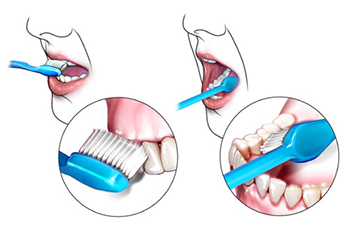
I’ve seen people brush the same four spots for two minutes and miss the other 60% of their mouth.brushguide The toothbrush needs to touch every crevice of every tooth, not just where it lands when you go into autopilot and start thinking about what you’re going to wear that day. It’s the toothbrush friction that cleans your teeth, not the cleaning product. Plaque is a growth, like the pink or grey mildew that grows around the edges of your shower. You’ve gotta rub it off to get it off. No tooth cleaning liquid, paste, creme, gel, or powder is going to make as much of a difference as your attention to detail will.

The solution.

Use what you like. It’s that simple. If it tastes good and feels clean to you, you’ll use it more often, brush longer, feel better, be healthier.

You can use baking soda, or coconut oil, or your favorite toothpaste, or even just plain water. The key is to have a good technique and to brush often. A music video makes this demonstration a little more fun than your usual lecture at the dental office, although, in my opinion you really still need to feel what it is like to MASH THE BRISTLES OF A SOFT TOOTHBRUSH INTO YOUR GUMS:

A little more serious video from my pal Dr. Mark Burhenne where he demonstrates how to be careful with your toothbrush bristles:

Final word.

♬ It’s all about that Bass, ’bout that Bass, no bubbles. ♬ Heh, dentistry in-joke there.

Seriously, though, the bottom line is that your paste will mask brushing technique issues, so don’t put so much faith in the power of toothpaste.

Also you may have heard that some toothpastes contain decorative plastic that can get swallowed. Yeah, that was a DentalBuzz report I wrote that went viral earlier this year. And while I can’t claim total victory on that front, at least the company in question has promised that the plastic will no longer be added to their toothpaste lines very soon due to the overwhelming amount of letters, emails, and phone calls that they received as a result of people reading that article and making a difference.

But now I’m tired of talking about toothpaste.

Next topic?

I’m bringing pyorrhea back.

Trish Walraven RDH, BSDH is a mom and practicing dental hygienist in the suburbs of Dallas, Texas. She brushes her teeth every morning and night with a major-label toothpaste because she likes the way it makes her mouth taste but at lunch you never know. Sometimes it will be with a dry toothbrush, or dipped in her leftover coffee, one time she even brushed with a starlight peppermint out of desperation.

Resources:

PubMed.Gov: Role of dentifrice in plaque removal: a clinical trial.

PubMed.Gov: Clinical studies to determine the effectiveness of a whitening toothpaste at reducing stain

 PubMed.Gov: Factors contributing to adverse soft tissue reactions due to the use of tartar control toothpastes.

Vicky Flint RDH: The Truth about Toothpaste

DearDoctor.com: Toothpaste-What’s in it?

Trisha O’Hehir RDH: Dry Brushing -The Toothpaste Secret

Please share this article if you enjoyed it!

Filed Under: Featured, Preventive Care, Products Tagged With: Fluoride, plastic in toothpaste, tartar control, toothbrushing technique, toothpaste, triclosan, what's the best toothpaste

  • « Previous Page
  • 1
  • 2
  • 3
  • 4
  • 5
  • …
  • 26
  • Next Page »

About

DentalBuzz explores rising trends in dentistry with its own slant. The speed at which new products and ideas enter the dental field can often outpace our ability to understand just exactly the direction in which we are heading. But somehow, by being a little less serious about dentistry and dental care, we might get closer to making sense of it all.

So yeah, a tongue-in-cheek pun would fit really nicely here, but that would be in bad taste. Never mind, it just happened anyways. Stop reading sidebars already and click on some content instead.

Recent Posts

  • Dry Humor, Wet Biofilm: A DentalBuzz Look at Periodontal Desiccation Therapy
  • Are affordable online nightguards any good?
  • CareCredit: The Easy Way Billionaire Banks Fill Cavities in Their Profits
  • Off-Label and Totally Legal: What the FDA Won’t Say About Fluoride Varnish & SDF
  • Dentists Rejoice over the Leica Camera Tariffs
  • It’s not OK for your dental practice to use free cloud-based communication
  • Patients ask, “Is it safe to go back to the dentist?”
  • Free “return to work guide” from the American Dental Association
  • Why COVID-19 increases your need for contactless payments
  • A virtual care package from worried dental hygienists
  • Lead Aprons feel so good! Here’s why.
  • What is this $&!% on my toothbrush?

Article Archives

Contact Us

Guest columnists are welcome to submit edgy stories that cover new ground (no regurgitations, please!) , or if there's a topic that you'd like to see explored please punch in your best stuff here and see if it ends up sticking to the website.

Follow DentalBuzz on Social Media

  • Facebook
  • Instagram

DentalBuzz Copyright ©2008-2026 • bluenotesoftware.com • All Rights Reserved