• Archives
  • Products
  • Operative Dentistry
  • Dental Team Communication
  • Practice Management
  • News
  • Research
  • Dental Debates

DentalBuzz: a jolt of current

trends, innovations, and quirks of dentistry

  • Home – Latest Buzz
  • Bloglist
  • Indie Dental Showcase
  • Free Dental Timer
  • Practice printables
  • Podcasts

Release the (S.) mutants

February 9, 2011 By Trish Walraven 2 Comments

by Trish Walraven

The Dramatization:

At first it was small. The outbreak began in Florida’s Tampa Bay Area as local hospitals noticed an influx of patients with complaints of turquoise discolorations of their lips and aversion to simple carbohydrates. Once case histories were correlated it was noticed that all those who were affected had either recently received an inoculation of a mutant version of Streptococcus mutans at their dentist’s office or had been in close contact with someone who had.

Initially the culprit was thought to be excessive consumption of blue raspberry slushies, but by the time the CDC discovered that an organism was responsible for these symptoms and that it was bacterial in origin and highly contagious the disease had spread far beyond Florida and had affected millions throughout the US and abroad.

There have been no reports of mortality, save the demise of the soft drink and candy industries. Sugar consumption has plummeted as more of the population becomes infected by this new strain of bacteria which was originally created to cure the problem of dental decay. Because persons who are affected display a noticeable change in their appearance, blue lips have become a strong signal of exclusion due to the fear surrounding this epidemic. However, as more evidence points to the positive outcomes of having been infected, the “blue look” is currently trendy in the larger cities. Blue-lipped patrons that had been banned from public venues such as restaurants and arena events are slowly trickling in, thanks to the assurances from the World Health Organization that this current situation has actually caused more good than harm. The long-term effects will be felt by dentists, who, in the next 30 years, will see an attrition of their necessity as caries becomes extinct, and possibly within the cosmetics industry with a shift in lip color preferences.

The Reality

Um, Yay? It’s been like, since the early 70’s that everyone’s been asking for a caries vaccine. And wouldn’t you know it? A company in the United States is already so ON this. Oragenics first initiated their first Phase 1 Clinical trials in 2005 but were halted by the FDA because of the fear of something happening like the above scenario. Think I’m kidding? Okay, maybe I was being sensational. But there can be genuine risks when you fiddle with a few genes, and the FDA seemed to be mainly concerned with the lack of a plan to eradicate attenuated strains in the test subjects’ children. AHHHHH!

It starts to get interesting when you look at the solution that Oragenics came up with to begin their second Phase 1 testing announced last week: The trial subjects will be inoculated with a strain of S. mutans that cannot survive without the amino acid D-alanine, which is not found in a normal human diet. This means that the subjects will have to feed their germs daily with a mouthwash to keep them from dying.
Are you excited yet? Well, you’d better hold those horses back for a while. A long while. It’s going to take a bunch of time and a lot more money to get this to the market.

The inoculation is designed to be a painless 5-minute treatment with a cotton-tipped swab to deliver the suspension of Oragenics’ patented bacterial strain into a patient’s mouth during routine dental visits. But this one won’t die without feeding. It will live forever.

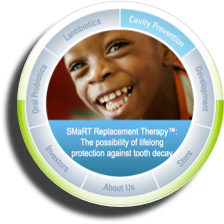
And what is it supposed to do once it goes viral? Err… bacterial? Oragenics calls this treatment SMaRT Replacement Therapy™ and it promises to:

• Offer lifelong protection against tooth decay caused by S. mutans

• Eliminate the creation of lactic acid by oral bacteria

• Dramatically reduce the ability of S. mutans to cause tooth decay

• Be genetically stable

• Grow at a rate similar to non-genetically-altered S. mutans

• Aggressively displace the native, decay-causing strains of S. mutans and preemptive colonization of its niche

• Not cause any acute or chronic adverse side effects

I think it’s a foregone conclusion that this sort of genetic manipulation is probably the only way we’ll and break caries’ hold on humanity and the loss of teeth caused by decay. We can’t just kill all the bugs in our gut – all the Jamie Lee Curtis Activia commercials have given us TMI about probiotics lately – so it makes sense that this same premise is true in our mouths.

And the raspberry slushie is still your best bet for getting blue lips. Sorry, Oragenics will probably not be helping you there.



Filed Under: Preventive Care, Products, Research Tagged With: caries vaccine, FDA, linkedin, mutant bacteria, Oragenics, research, Strep mutans

Patients can keep on smoking?

January 24, 2011 By Trish Walraven 6 Comments

by Trish Walraven

Stanky Moufs, Stanky Moufs, I want to rid the world of Stanky Moufs. When a patient sits down in a chair with a freshly-stanked cigarette mouf, that smell hangs in the operatory longer than their jacket.

Is the American Lung Association with me? NO! Maybe it’s because they’re still getting a part of that $206 billion settlement from Big Tobacco back in 1998. Can’t put their sugar daddy out of bidness.

Well then, is the government with me? Not really. The government wants to tax those stanky moufs for recreational nicotine use, and they want to regulate the patches, gums, and lozenges being sold as medical devices designed for smoking cessation.

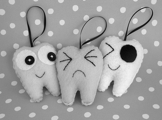
How many smoking patients do you have that don’t want to quit? They’re not supposed to admit to you that they really love smoking, now. Especially not to you. But more and more of them are coming into my practice, breaths a-bloomin’, tissues pinkin’, and when I ask them if they quit smoking, they don’t say yes. They say that they’ve switched to e-cigarettes.

RRRrrrRRT ( that record scratch stop noise that’s used too much in media but I can’t help myself). WHAT THE?  WHAT IS AN E-CIGARETTE?

I Gurgled it. Gurgling is kind of like Googling except that you ask your patient an open-ended question while they’ve got a little spit in the back of their throat that they really don’t have but they think they do and they want you to suck it out before they answer the question.

Best answer I got: “Well, everyone in our office either got a supply of E-Cigarettes if they would quit using regular cigarettes, or $200 to use on themselves if they weren’t smokers.” An employer has gone out of their way to get tobacco out of the bodies of their workforce. This sounded BIG.

That’s when the internet got much more handy than Gurgling. Here’s a great description of an E-Cigarette from AlterNet:

The e-cigarette was invented in China in 2004. It’s a cigarette-shaped tube that contains a rechargeable battery, a mini-vaporizer, a small reservoir, sensors and, in most cases, a light on the tip. The sensor notes when you take a drag on the tube and turns on the vaporizer, which more-or-less instantaneously turns the substances in the reservoir into a stream of visible water vapor that mimics the taste and feel of tobacco smoke. The tip glows like the end of a lit cigarette with each drag. It’s infused with the taste of tobacco – or tobacco combined with other flavors for those who are into that sort of thing – and nicotine, in various doses (including none at all). The refill cartridges – which look like the butt of the cigarette–give you about the same number of drags as a pack of cigarettes, but cost around $3 each – a bit more than half the national average and a third of what a pack of smokes go for in places like New York City.

The next question everyone asks is “Is it safer?” (I must stop with the Marathon Man references…this is only my second offense, sorry!). But really. Are e-cigs safer than tobacco? I for one am totally convinced that they will kill you much, much slower than tobacco, and far slower than water (if you’re drowning in it, of course). It’s the combustion that creates the majority of carcinogens found in cigarettes, which is why no real smoke is safe. The vapor ingredients in an e-cigarette – propylene glycol or glycerin – are Generally Recognized As Safe (GRAS) by the Food and Drug Administration. The problem arises when you don’t know what else is being added to the cartridges. Like Cialis. No joke. You can get some Cialis to smoke in an e-cigarette here. What about a dangerous, banned weight loss drug? They’ve got that too.

These extreme additives are all the excuse that e-cigarette opponents need to try to get them banned in the United States. That’s why no one will touch this issue, especially with the FDA coming down hard on new tobacco products in March. The federal courts are leaving it alone for now, but arising is a vast current of e-cigarette fanboys. They call themselves Vapers, and their recreation? Vaping.

What do you prefer? Stank Mouf or vape mouth? If your patients are committed to their cigarettes, it might not be such a bad idea to turn them on to something that may do less harm than their current habit.

I don’t know about you, but my ops are smelling better already. 

UPDATED 2/21/19: The CDC has an infographic with a few surprising current statistics about e-cig usage. You can view it here:

https://www.cdc.gov/tobacco/basic_information/e-cigarettes/pdfs/Electronic-Cigarettes-Infographic-p.pdf

Filed Under: Featured, Preventive Care, Products, Research, Technology Tagged With: dental, e-cigarettes, e-cigs, marathon man, preventive care, smoking cessation, vaping

New year at DentalBuzz

January 1, 2011 By Trish Walraven Leave a Comment

By Trish Walraven

2011 is the year for inspirations to move us towards actions, so it only seemed right today to share a few things with the DentalBuzz audience.

My subscriptions to various RSS feeds is getting rather long, especially the dental blogs, and it’s just not fair for me to keep them all to myself! You’ll notice that there’s a new Bloglist to help you get all of the news and insights that concern you as a dental professional. Some other resources that I use are DentalTown and Dr. Bicuspid, but if you also enjoy following individual voices then you simply must browse through all of the great blogs that I’ve evaluated here at DentalBuzz. Also, please me know if there are some that you read that I haven’t listed.

You may have already noticed the other change. It’s the voice here. The impersonal nature of third person sometimes causes me to feel disengaged from the audience, and as much as humor is less risky from that perspective (especially when bravery is involved because it can be DIFFICULT to pull off!) it also makes it harder to stay inspired. So hi, audience. One of my favorite kinds of humor is that which is Andy Kaufman-esque so it’s okay if you laugh uncomfortably at my poor comedic attempts.

In the meantime, this controversial article was recently written about a product that I was hoping to bring to the table at our next office meeting. The product in question is Perio Protect®, an anti-biofilm regimen that shows great promise for non-surgical perio resolution. Is it a scam? Can a periodontist’s opinion be trusted, especially when the argument is against a product that is being touted to specifically keep patients out of a periodontist’s practice? In this case, power to the blogger perio dude. Even though it is in his best financial interest to scorn a system that relies on patient compliance at home to be effective, he gets huge points for diligent research. Ultimately, it comes down to me and the irritation that he has caused me personally. Because I’ll now have to find some other implementable product or service to present in our practice for the new year.

Also Dr. Todd, thanks for the inspiration.

Filed Under: Humor, Products, Research Tagged With: Blogroll, Perio Protect

Plugging amalgam in a sinking ship

December 14, 2010 By Trish Walraven Leave a Comment

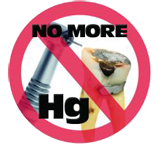
Tomorrow the an FDA panel will “probe cavity fillings” (that’s really the title of this segment shown on CBS this evening):
http://www.cbsnews.com/stories/2010/12/14/eveningnews/main7150398.shtml

Once again the media is out to sensationalize the debate by conjuring up images of daily vomiting, years of sinus congestion, and children who can’t go an hour without a seizure or two. And once again, it is mercury that is the alleged culprit.

If it really were as bad as it appears for the few people that are willing to testify before the panel, don’t you think that there would be a significantly larger population of people affected by mercury poisoning?

Four years ago, a panel decided that further study was necessary to understand whether amalgams give off more vapors when being placed or removed versus the amount of mercury vapor produced with chewing and brushing.

Maybe they were on to something there! What the FDA should do is launch a study of mercury levels in the blood, urine, and body tissues of the dentists who regularly place and remove amalgams, correlating symptoms described by those afflicted with mercury toxicity with the dentists in the study. If those symptoms are consistent in the dentists who have high levels of mercury, then go from there to decide whether amalgams are truly a problem.

The ADA stands behind the science. And until it is refuted, they are doing the right thing by not wavering on their position.


UPDATE – December 20th, 2010

Last week, an advisory panel to the US Food and Drug Administration (FDA) convened a professional panel review to again look at the safety issues associated with mercury amalgam in dentistry. A group of scientists and dental and medical professionals, lead by the International Academy of Oral Medicine and Toxicology (IAOMT), had called for FDA to reconsider its July 2009 “no risk” classification of mercury fillings. The FDA panel concluded that there are no huge scientific flaws in the agency’s 2009 finding that mercury-based dental fillings are safe for adults and children aged 6 years and older. The panel, however, recommended that the FDA look at more data, including the latest data, on the possible health risks dental amalgam poses to pregnant women and their fetuses and to young children, particularly nursing infants whose mothers have these fillings. The panel also said the FDA should consider adding warnings for these groups to the material’s product instructions.
 The ADA commended the panel’s call for continued research while offering support for the FDA’s current amalgam regulation. The panel’s call for more scientific data acknowledged concerns of dental amalgam opponents who link mercury exposure to dozens of diseases ranging from autism to Alzheimer’s disease.

Filed Under: Dental Debates, Operative Dentistry, Research Tagged With: amalgam, CBS, FDA panel, Mercury Toxicity, scandals

Anesthesia buffering: Onpharma’s Onset

July 15, 2010 By Trish Walraven 13 Comments

After all the buzz in the past two years about a new type of carpule that also starts with an “O,” you may think you’ve seen this product before. In one sense it’s similar: it must be used in conjunction with your regular anesthetic instead of as an anesthesia alternative.  What’s more exciting is that this just may change the way we prepare syringes for every single patient from now on.

Onset™ is the name of a new buffering agent created by Onpharma™ Inc. that will be available as soon as the final FDA review is complete. If you can answer yes to these questions, read on:

  • Do you want to eliminate the sting that can be caused by the acidity of local anesthetic?


  • Would you like to be able to give an injection and go to work immediately?


  • Are you interested in a product that will help you get your patients profoundly numb, even when infection is present?


  • What about tissue necrosis? Would you like to prevent it if possible?

[Read more…]

Filed Under: Operative Dentistry, Products, Research Tagged With: Anesthesia, anesthetic buffering, dental anesthesia buffering, dental injections, dental pain management, Novalar, Onpharma, Onset, OraVerse

  • « Previous Page
  • 1
  • 2
  • 3
  • 4
  • Next Page »

About

DentalBuzz explores rising trends in dentistry with its own slant. The speed at which new products and ideas enter the dental field can often outpace our ability to understand just exactly the direction in which we are heading. But somehow, by being a little less serious about dentistry and dental care, we might get closer to making sense of it all.

So yeah, a tongue-in-cheek pun would fit really nicely here, but that would be in bad taste. Never mind, it just happened anyways. Stop reading sidebars already and click on some content instead.

Recent Posts

  • Dry Humor, Wet Biofilm: A DentalBuzz Look at Periodontal Desiccation Therapy
  • Are affordable online nightguards any good?
  • CareCredit: The Easy Way Billionaire Banks Fill Cavities in Their Profits
  • Off-Label and Totally Legal: What the FDA Won’t Say About Fluoride Varnish & SDF
  • Dentists Rejoice over the Leica Camera Tariffs
  • It’s not OK for your dental practice to use free cloud-based communication
  • Patients ask, “Is it safe to go back to the dentist?”
  • Free “return to work guide” from the American Dental Association
  • Why COVID-19 increases your need for contactless payments
  • A virtual care package from worried dental hygienists
  • Lead Aprons feel so good! Here’s why.
  • What is this $&!% on my toothbrush?

Article Archives

Contact Us

Guest columnists are welcome to submit edgy stories that cover new ground (no regurgitations, please!) , or if there's a topic that you'd like to see explored please punch in your best stuff here and see if it ends up sticking to the website.

Follow DentalBuzz on Social Media

  • Facebook
  • Instagram

DentalBuzz Copyright ©2008-2026 • bluenotesoftware.com • All Rights Reserved