• Archives
  • Products
  • Operative Dentistry
  • Dental Team Communication
  • Practice Management
  • News
  • Research
  • Dental Debates

DentalBuzz: a jolt of current

trends, innovations, and quirks of dentistry

  • Home – Latest Buzz
  • Bloglist
  • Indie Dental Showcase
  • Free Dental Timer
  • Practice printables
  • Podcasts

To juice or papoose is the question

July 1, 2010 By Trish Walraven 22 Comments

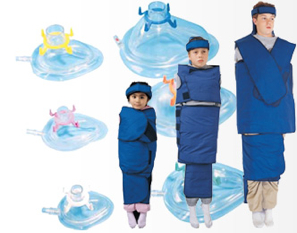
papooseormaskNo one likes the idea of seeing a child being restrained. Especially not at the dental office. But on the same hand, if a child is admitted to a hospital, has thousands of dollars spent to knock them out with potentially risky gas, and is in need of a procedure that takes only minutes to perform, which care is the right one?

Notorious press has given the papoose board a bad name. Granted, its utilization can be abused, especially as seen in the story that was profiled on ABC’s 20/20. General anesthesia isn’t without its opponents as well, especially when a child dies.

With that somber note hanging in the air, you may want to revisit David After Dentist and pick yourself up with a little sedation dentistry humor. Even if you don’t agree that his dad should have ever posted the video on YouTube, it’s still so freakin’ funny.

Children who can’t be cooperative still need a means of getting their dentistry done, so pedodontists must make choices that sometimes include the use of papoose boards or general anesthesia. For entertainment’s sake, let’s just call this polarizing dilemma by another name: Hugs vs. Drugs.

Hugs Drugs
Familiar name Papoose board restraint “Knocked out with the mask”
Kinder-sounding euphemism Protective stabilization Inhalation anesthesia
Risks
  • Creation of dental phobias
  • Inadequate relaxation resulting in poor pain  management
  • Difficulty in treating a lengthy, complicated case
  • Aspiration
  • May affect the developing brain (autism/ADHD)
  • Death
Benefits Can be used quickly and inexpensively without much training Instantaneous and complete patient control
Perception Brute force and inhumane treatment seen in Medicare clinics Clean, modern care paid for by inscos and private payer

There have been accusations from both sides: allegations of “nest feathering” by morally outraged dental anesthesiologists, abuses of public funds to pay for unnecessary procedures, the ultimatums given that any child restraint is considered grounds for lawsuits, equating papoose boards with third-world dental care, or offering general anesthesia for simple extractions when a combination of restraint and other sedation would be less expensive and as effective.

As a dental professional, it is your responsibility to make well-informed choices about sedation and restraint methods. For instance, individuals with autism or cerebral palsy may find that restraints are not only necessary, but even welcomed when compared to the use of drugs that can do more harm than the good that the dentistry is trying to achieve. Restraints may not be a better choice for toddlers whose biggest problem is a helicopter parent or two who are freaked out about the psychological trauma of having an irreparable tooth pulled. If a parent freaks, most likely so will the child, so it may be your choice to pander to the whiny world of children who are more in charge than their parents. After all, it’s no big deal to go under GA for a five-minute ear tube procedure with the ENT, right? That’s expected.

No matter what you decide to do, as long as you’re doing it from a level of comfort with your ability, and most importantly, from a sense of compassion, you should be able to confidently make the call for each patient, no matter where it falls on this line.

But sometimes, you just want to throw up your hands and say “AHHHHH I QUIT!” because you don’t know how to manage a patient. That’s when it’s awesome to have someone in your contact list who you trust to make this call.

And then pass the buck to them, because referring out can be very, very gratifying at times.DBSmile

Filed Under: Dental Debates, Operative Dentistry Tagged With: Anesthesia, Papoose board, scandals

Dental Infection Control Sucks

June 11, 2010 By Trish Walraven Leave a Comment

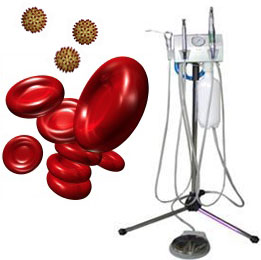
So maybe it was the equipment allowing backflow into patients mouths during extractions (blecch), or inadequate sterilization measures, but whatever the case, Hepatitis B has been officially contracted during dental procedures.
A free, volunteer-staffed program offered at a West Virginia high school found that three patients and two clinicians came down with Hepatitis B viruses that were tested and matched at a molecular level, indicating that the infections came from a common source.

All people involved at the Mission of Mercy clinic last summer were mailed letters last week encouraging that they be tested for the virus. The testing is being paid for by the state of West Virginia. (Insert your best West Virginia joke here. And then be ashamed of yourself for doing it).

If you have any response to this news, it should be to check your own infection control systems, to be sure that your high speed evacuation is up to par, that you aren’t just wiping down handpieces, and that every patient is treated with those universal precautions that were so important in dental school.

After all, you wouldn’t want this happening in an elite state, like Washington. DBSmile

Filed Under: Operative Dentistry Tagged With: dental handpieces, Dental virus transmission, Hepatitis B, Infection control, scandals, volunteer dentistry

Empowering patients to ditch Dental Bling

May 2, 2010 By Trish Walraven Leave a Comment

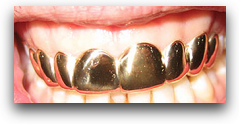
GoldteethThere’s nothing worse in the fashion world than being stuck in an outdated trend. Five years ago you would have thought that all the reception rooms of dental offices were filled to capacity because of all the patients demanding that their teeth reflect the times with grills of gold teeth.

But that’s not the case today.

The economy has since tanked and the price of gold is higher than ever (currently over $1,100 per ounce). The only one glinting a smile of 14 karats these days is Lady Gaga, and she safely skirts the hip-hop genre by going all Team Edward with vampire fangs.

So when dental gold is out (literally), you can impress your patients with a small token of your appreciation. Take out their gold crowns, inlays, bridges, and then give it to the patient along with a postage-paid envelope.

What’s cool about this deal is where the envelope goes. Not to some shady “Cash4Gold” operation. It goes to a reputable company that will pay your patients back a fair price.

And here comes the best part: Garfield Refining Company is so generous, they’ll give you ten percent for the referral. Don’t be afraid to let your patients know that you’re getting a kickback. They’ll just be happy that you’re not keeping all the dental gold for yourself.

So click this Garfield boxGRC on the left to enroll in the Patient Bling Program and get a few envelopes for your office. Nevermind that they still call it the Scrap Program; they just haven’t seen this review yet.

You also might want to look through Dental Products Report’s list of gold refining companies. And in case you were wondering, this is not a paid advertisement. Garfield Refining simply has a great idea that spreads goodwill and makes money for everyone.DBSmile

Filed Under: Anecdotes, Fun, Operative Dentistry Tagged With: Dental Grills, Dental Patients, Gold Refining

Slackers win against Invisalign SoupNazis

April 23, 2010 By Trish Walraven Leave a Comment

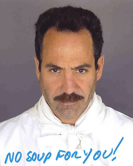
SoupNaziThe idea of dozens of dentists lined up, hoping to have their bowls filled with a ladle of delicious….CLEAR PLASTIC IMPRESSIONS….is weird. “NO INVISALIGN FOR YOU!” screamed the white-coats at Align Technology. Dentists completing less than 10 cases per year were suspended from their accounts, and sent away, bowls empty, furious with the scare-tactic attempt to boost sales and case acceptance.

Until yesterday. Instead of getting your soup in a bowl at the counter,  you complainers will be able to get it in a to-go container, from the “Concession Stand”:

Align Technology Eliminates Annual Case Requirement for Invisalign(R) Providers

SANTA CLARA, Calif., Apr 22, 2010 (GlobeNewswire via COMTEX News Network) — Align Technology, Inc. (Nasdaq:ALGN) today announced a strategic change to the Invisalign proficiency program the Company launched last June to help ensure Invisalign providers build a baseline of Invisalign product experience and knowledge through minimum annual case and continuing education (CE) goals. Effective immediately, doctors will no longer be required to start a minimum of ten shipped cases per year to maintain their active provider status. Doctors are still required to complete a minimum of ten Invisalign continuing education (CE) hours per year.

“Despite continued strong efforts by our customers to meet the annual proficiency requirements, many customers remain frustrated with the program, particularly the case requirement,” said Dan S. Ellis, vice president, North American Sales. “While we remain deeply committed to ensuring great treatment results for Invisalign doctors and patients, we are equally committed to listening to our customers and responding to their needs.”

Align will continue to emphasize the importance of Invisalign professional education in treatment success by maintaining the annual ten Invisalign CE hour requirements. In addition, Align will focus on continued product innovation and performance improvements and customer loyalty and rewards programs to help drive great treatment experiences and results. As part of this focus, Align will continue to promote the benefits of Invisalign Preferred Provider status for doctors who start ten or more cases each year.

Doctors who do not complete a minimum of ten Invisalign CE hours in a calendar year will have their Invisalign accounts temporarily suspended until they complete the minimum CE hours. With more than 200 hours of lecture-based and online learning opportunities, Align’s robust educational curriculum makes it convenient for doctors of every Invisalign experience level to stay current with product and clinical advancements.

Doctors whose customer accounts were deactivated or changed to limited status for failing to meet the 2009 proficiency requirements can reactivate their account and start using Invisalign again at any time by completing a Clear Essentials I or Clear Principles training course and thereafter meeting the annual ten CE hour requirement. More information on the proficiency program and related changes are available at http://vip.invisalign.com/proficiency.

_________________

Also worthy of reading are the frustrations aired at Jim DuMolin’s great website: http://www.thewealthydentist.com/SurveyResults/162-Invisalign-Dentists.htm.

DBSmile

Filed Under: Dental Debates, Operative Dentistry, Products Tagged With: invisalign, orthodontics, scandals

Texas Hygienists can use lasers – pew pew!

April 18, 2010 By Trish Walraven 2 Comments

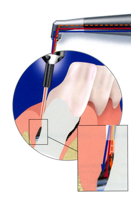
periolaser

Just so we have this straight: lasers are okay, but needles? Not so much. Texas is a bit behind the times regarding local anesthesia. But the great news is that their state board just recently issued a statement that affirms the legality of laser use by formally trained hygienists for treating periodontal disease that is not responding to traditional therapy.  Here it is in the Board’s own words:

Texas State Board of Dental Examiners’ Position Statement on the Use of Lasers by Dental Hygienists

The Texas State Board of Dental Examiners is aware that lasers can be used to replace or supplement traditional dental instruments such as handpieces, scalpels, curing lights, and the explorer.

It is the position of the Board that licensed dental hygienists may use lasers that are not capable of cutting or removing hard tissue, soft tissue, or tooth structure to perform clinical tasks that are otherwise within the hygienist’s scope of practice. Dental hygienists must perform intraoral procedures involving a laser under the general supervision of a licensed dentist.**

Whenever a new treatment modality is brought forward, it is the Board’s policy that the licensee must have proficiency and training in the use of the technology for the procedure performed. Licensees utilizing new technology must maintain documentation of the satisfactory completion of formal continuing education or training using the technology for the procedures performed. The particular technology utilized performing any particular clinical task does not alter the requirement that a dentist is ultimately responsible for any procedure delegated to an auxiliary and the auxiliary performing the procedure remains responsible for performing the task within the standard of care.

** “General supervision” means that the dentist employs or is in charge of the dental hygienist and is responsible for supervising the services performed by the dental hygienist. The dentist may or may not be present on the premises when the dental hygienist performs the procedures.

DBSmile

Filed Under: Dental Debates, Operative Dentistry Tagged With: dental hygiene, lasers, State Board

  • « Previous Page
  • 1
  • …
  • 6
  • 7
  • 8
  • 9
  • Next Page »

About

DentalBuzz explores rising trends in dentistry with its own slant. The speed at which new products and ideas enter the dental field can often outpace our ability to understand just exactly the direction in which we are heading. But somehow, by being a little less serious about dentistry and dental care, we might get closer to making sense of it all.

So yeah, a tongue-in-cheek pun would fit really nicely here, but that would be in bad taste. Never mind, it just happened anyways. Stop reading sidebars already and click on some content instead.

Recent Posts

  • Dry Humor, Wet Biofilm: A DentalBuzz Look at Periodontal Desiccation Therapy
  • Are affordable online nightguards any good?
  • CareCredit: The Easy Way Billionaire Banks Fill Cavities in Their Profits
  • Off-Label and Totally Legal: What the FDA Won’t Say About Fluoride Varnish & SDF
  • Dentists Rejoice over the Leica Camera Tariffs
  • It’s not OK for your dental practice to use free cloud-based communication
  • Patients ask, “Is it safe to go back to the dentist?”
  • Free “return to work guide” from the American Dental Association
  • Why COVID-19 increases your need for contactless payments
  • A virtual care package from worried dental hygienists
  • Lead Aprons feel so good! Here’s why.
  • What is this $&!% on my toothbrush?

Article Archives

Contact Us

Guest columnists are welcome to submit edgy stories that cover new ground (no regurgitations, please!) , or if there's a topic that you'd like to see explored please punch in your best stuff here and see if it ends up sticking to the website.

Follow DentalBuzz on Social Media

  • Facebook
  • Instagram

DentalBuzz Copyright ©2008-2026 • bluenotesoftware.com • All Rights Reserved